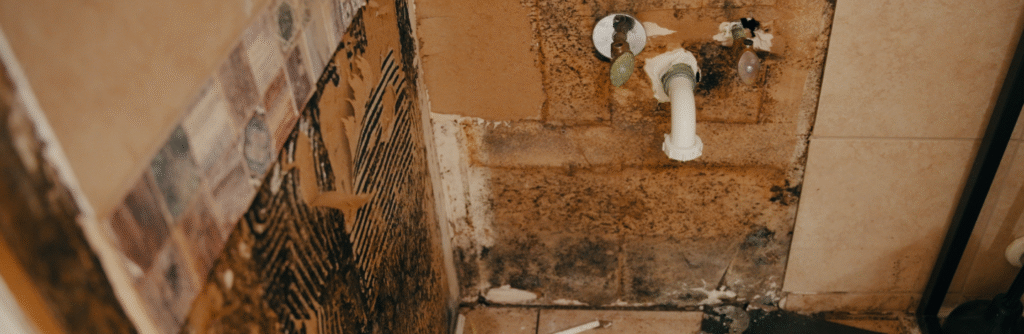
Most Ohio homeowners assume their insurance will cover mold if it shows up in their home. Many of them find out the hard way that the answer depends entirely on how the mold got there — and whether they acted fast enough when the water problem started.
Mold coverage is one of the most misunderstood parts of a homeowners insurance policy. This guide breaks down exactly what is and isn’t covered in Ohio, what kills a mold claim, and what you can do to protect yourself before and after a water event.

The Short Answer: It Depends on the Cause
Ohio homeowners insurance policies are designed to cover sudden, accidental losses — not gradual deterioration or maintenance problems. Mold coverage follows the same logic. If mold results from a covered peril, it may be covered. If it results from a slow leak, deferred maintenance, or chronic moisture, it almost certainly won’t be.
A burst pipe in January that floods your basement and causes mold within days — that’s a sudden, accidental event with a clear cause and a clear timeline. Most standard Ohio homeowners policies would cover both the water damage and the resulting mold remediation, up to the policy’s mold sublimit.
A slow drip under a bathroom sink that went unnoticed for six months and produced mold behind the vanity cabinet — that’s gradual damage from a maintenance issue. Insurers will typically deny that claim on the grounds of neglect, even if the homeowner genuinely didn’t know about it.
What Triggers Coverage — Covered Perils in Ohio
For mold to be covered, it generally needs to result from a covered peril. Standard homeowners policies in Ohio typically cover mold that results from:
Sudden pipe bursts or plumbing failures. Appliance overflow events — a washing machine hose failure, a dishwasher leak, a water heater rupture. Storm damage that allows water entry — a wind-damaged roof that allows rain intrusion, for example. Accidental discharge from an HVAC system.
In each of these cases, the key word is sudden. The water event happened at a specific moment, caused identifiable damage, and mold developed as a direct result within a reasonable timeframe.
What Voids a Mold Claim in Ohio
Insurance adjusters are trained to look for evidence of gradual damage, neglect, or delayed response. Several factors commonly result in mold claims being reduced or denied:
Delayed response after a water event. If a homeowner knew about water damage and didn’t act promptly to dry it out, the insurer can argue the mold resulted from inaction rather than the original event. This is one of the most common reasons covered water damage claims get complicated when mold enters the picture.
Chronic moisture conditions. Basements with persistent humidity issues, crawl spaces that regularly accumulate moisture, and bathrooms without adequate ventilation are maintenance issues. Mold that develops from these conditions is not covered.
Flooding from external sources. Standard homeowners policies do not cover flooding from rivers, storm surge, or groundwater. Flood coverage requires a separate NFIP or private flood insurance policy. Mold that develops after an excluded flood event is also excluded.
How Much Will Ohio Insurance Actually Pay?
Even when mold is covered, most standard homeowners policies in Ohio cap mold remediation payments with a sublimit — typically between $5,000 and $10,000. The average professional mold remediation job runs between $1,500 and $4,000 for a contained residential problem. More extensive jobs — mold that has spread through wall cavities, into structural framing, or across multiple rooms — can run $10,000 to $30,000 or more.
If your coverage sublimit is $5,000 and the remediation scope is $18,000, the gap comes out of your pocket. Reviewing your policy’s mold sublimit — and adding an endorsement to increase it if needed — is worth doing before a claim situation arises.
What to Do Right After a Water Event to Protect Your Claim
The decisions made in the hours immediately following a water event directly affect whether a mold claim will be supported later. Document everything before cleanup begins. Photograph and video the source of the water, the extent of damage, the affected materials, and water levels where visible.
Contact your insurance company promptly to report the event. Begin mitigation — water extraction and drying — as soon as possible. Insurers expect policyholders to take reasonable steps to prevent additional damage. A claim that shows documented, rapid response is far stronger than one that shows days of inaction before cleanup began.
If mold appears days after a water event, connect it directly to the original claim. A professional remediation contractor can document that the mold is a direct result of the covered loss, which keeps it within the original claim rather than as a separate issue.
Working with a Contractor Who Understands the Insurance Process
Professional remediation contractors who work regularly with insurance claims understand what documentation adjusters need. A written scope of work, moisture readings at intake and at completion, photographic documentation of affected materials before removal, and post-remediation clearance testing all support the claim process.
Choosing a contractor who is IICRC-certified and familiar with the insurance workflow matters. It keeps the claim moving, reduces disputes over scope, and produces the paperwork that adjusters need to process payment.
Ram Mold Pro Works with Insurance Claims Across Dayton and Ohio
Ram Mold Pro provides IICRC-certified mold remediation for homes and commercial properties throughout Dayton, Kettering, Centerville, Oakwood, Beavercreek, Springboro, Lebanon, West Chester, and the greater Miami Valley. We respond quickly, document thoroughly, and work directly with insurance adjusters throughout the claims process. If you have a mold situation and aren’t sure what your insurance covers, call us first. We can assess the situation, document what we find, and help you understand your options before committing to a scope of work. Call Ram Mold Pro at 888-609-6653 or visit www.rammoldpro.com.