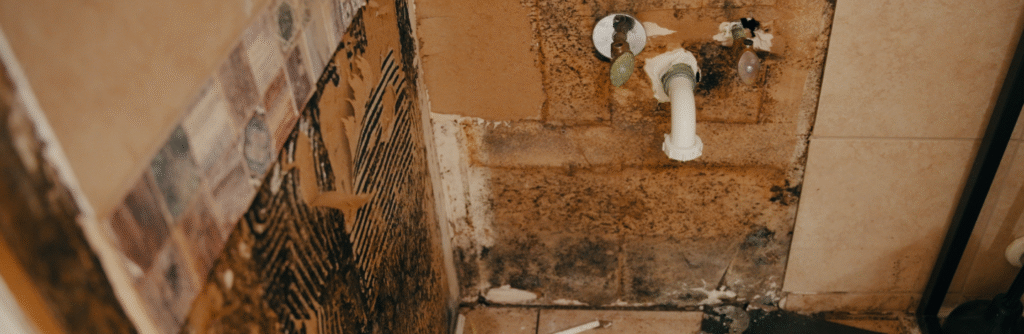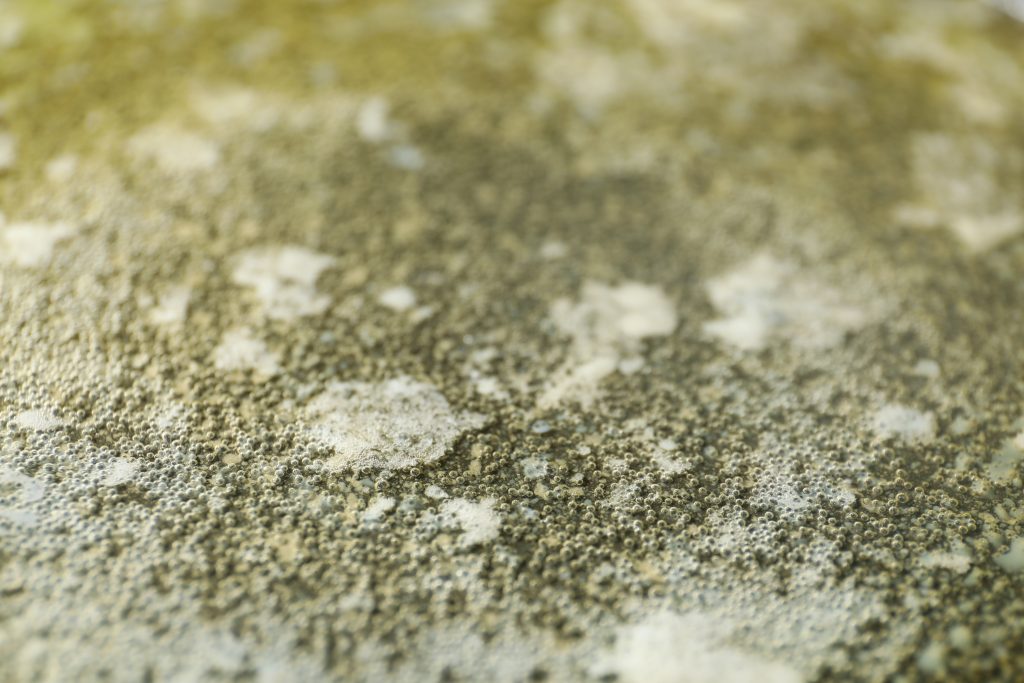
The most dangerous mold in your home isn’t the kind you can see. A dark spot on a bathroom tile is visible and easy to address. The mold growing inside a wall cavity after a slow pipe leak, or spreading through a crawl space under your living room floor — that’s the kind that builds up for months without anyone knowing it’s there.
Hidden mold is common. An estimated 47% of U.S. homes have some degree of mold or moisture damage. Most of those homeowners don’t know it. This guide covers what to look for, what your symptoms might be telling you, when testing makes sense, and when to stop guessing and call a professional.
The Visible Signs Most Homeowners Recognize — And Some They Don’t
Visible mold growth is the obvious one — dark spots in corners, discoloration along grout lines, fuzzy growth on walls or ceilings. What homeowners often miss are the structural signs that indicate mold is present behind finished surfaces.
Bubbling or peeling paint is one of the most commonly overlooked indicators. Paint bubbles when moisture is pushing through from behind the wall — and where there’s moisture behind a wall, mold usually follows. Warped or buckled drywall tells the same story. So does discoloration that appears in irregular patches, especially after a rainy season or near plumbing fixtures.
Flooring that feels soft or spongy underfoot is worth investigating. Floor joists and subfloor sheathing in moisture-prone areas like basements, bathrooms, and kitchens can be significantly compromised by mold growth before any surface signs appear.
The Smell That Tells You Before Anything Else
A persistent musty smell is often the earliest warning sign of hidden mold — and one of the most reliable. Mold produces volatile organic compounds (VOCs) as part of its growth process, and those compounds create a distinctive musty or earthy odor. You don’t need to see the mold to smell it.
Pay attention to where the smell is strongest. Musty odors that are concentrated in one room, stronger near a wall, or noticeably worse in a basement or crawl space access area often point directly to the mold source. A smell that increases when the HVAC system runs suggests mold may be present inside the ductwork or near a return air intake.
Health Symptoms That Point to a Mold Problem
Mold-related health symptoms are easy to misattribute. Persistent congestion, itchy or watery eyes, frequent headaches, fatigue, and worsening asthma are all common reactions to mold exposure — and all of them look exactly like seasonal allergies or a prolonged cold.
The key indicator is whether symptoms improve when you leave the building. If congestion clears up when you’re away from home for a few days and returns when you come back, the air quality inside your home is the likely cause. Children and elderly residents typically show symptoms first and more severely than healthy adults in the same environment.
Prolonged exposure to mold-affected environments can lead to more serious respiratory conditions, including hypersensitivity pneumonitis — a lung inflammation caused by repeated exposure to mold spores. For people with asthma or compromised immune systems, the threshold for serious effects is lower.
When DIY Testing Makes Sense — And When It Doesn’t
Over-the-counter mold test kits are widely available and inexpensive. They work by exposing a collection medium to the air or a surface and sending it to a lab to confirm whether mold spores are present. For a homeowner who just wants to confirm that what they’re seeing is mold before deciding on next steps, a DIY kit can answer that specific question.
What DIY kits cannot tell you: the species of mold present, whether spore concentrations are elevated compared to outdoor baseline air, where the source is, how far it has spread, or what it will take to fix. A positive result on a DIY kit tells you mold is there. It doesn’t give you a remediation scope.
Professional mold assessment uses air sampling, surface sampling, and moisture detection equipment — including infrared thermal imaging — to locate hidden moisture and mold, identify species and concentrations, and produce a written report that documents conditions and supports insurance claims.
Situations That Call for a Professional Assessment
Some situations warrant skipping the DIY test and going straight to a professional. If your home has had any flooding, water intrusion, or unresolved moisture problem in the past two years, a professional assessment is the right starting point. If health symptoms are present and not resolving, or if more than one person in the household is experiencing symptoms, call a professional.
If you can smell mold but can’t find the source, professional thermal imaging can locate moisture pockets behind walls and under floors that aren’t visible or reachable without equipment. If you’re buying or selling a home with any moisture history, a professional inspection protects both parties.
Any visible mold growth larger than 10 square feet is considered a Category 3 remediation under IICRC S520 guidelines and should not be addressed without professional containment and removal procedures. Attempting to clean large mold problems without proper containment distributes spores to previously unaffected areas of the home.
Ram Mold Pro Provides Professional Mold Assessment Across Dayton and the Miami Valley
Ram Mold Pro handles mold assessment and IICRC-certified mold remediation for homes and commercial properties throughout Dayton, Kettering, Centerville, Beavercreek, Oakwood, Springboro, Lebanon, Mason, and the surrounding Miami Valley. Our assessments use moisture metering, thermal imaging, and air sampling to find what visual inspection alone misses.
If any of the signs in this article sound familiar, don’t wait. Call Ram Mold Pro at 888-609-6653 or visit www.rammoldpro.com to schedule an assessment.