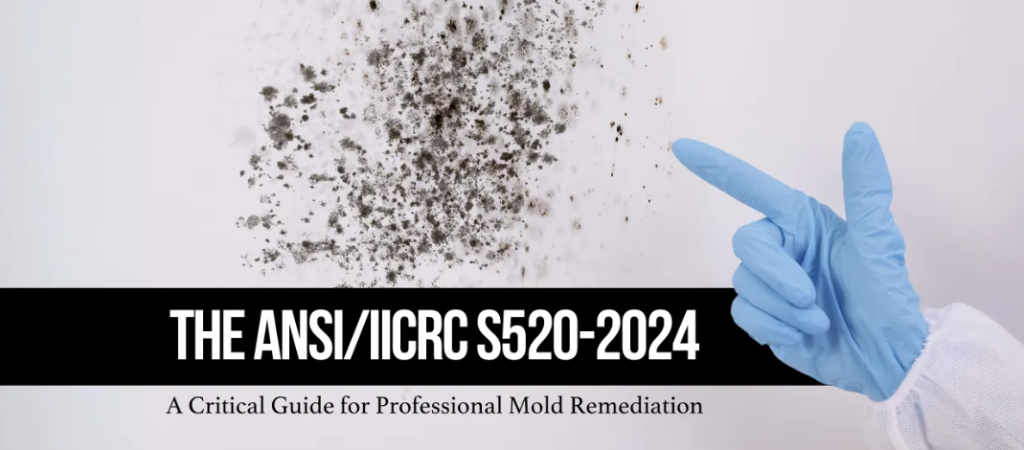
Most people think of mold as a winter problem — something that shows up after a flood or a frozen pipe. In Ohio, summer is actually when mold grows fastest, spreads furthest, and does the most damage before anyone notices it.
Here is why that happens, and what Dayton homeowners should be watching for right now.
Ohio Summers Create Ideal Mold Conditions
Mold needs three things to grow: a food source, moisture, and the right temperature. In a typical Dayton summer, two of those three are constantly available. Organic building materials — wood framing, drywall, insulation — are the food source. Summer humidity provides the moisture. The only variable a homeowner actually controls is where condensation and moisture are allowed to accumulate inside the house.
Ohio averages 70 to 80 percent outdoor humidity through July and August. When that warm, humid air meets the cooler surfaces inside an air-conditioned home, condensation forms on walls, in duct systems, behind appliances, and in any space where airflow is restricted. That condensation does not have to pool visibly. A surface that stays slightly damp for 24 to 48 hours is enough for mold to begin colonizing.
By the time there is a visible spot or a noticeable smell, the growth has typically been active for weeks.
The Air Conditioner Problem
Central air conditioning systems are one of the most overlooked mold sources in Dayton homes, and summer is when the risk peaks.
The evaporator coil inside your air handler operates by pulling warm indoor air across a cold surface. That process removes humidity from the air — which is intentional — but it also creates a consistently wet environment inside the unit. If the condensate drain is even slightly clogged, water backs up into the drain pan. If insulation around the ductwork is degraded, condensation forms on the outside of the ducts inside wall cavities where no one is looking.
An air conditioning system that is working correctly can still be actively growing mold in the drain pan, the coil housing, or the supply plenum. The air the system pushes through your home passes directly through that space before it reaches your living areas.
If your home smells musty when the AC kicks on, that is not a filter problem. That is a sign that mold is somewhere in the air handling system.
Crawl Spaces and Basements in Summer
In the Miami Valley, homes with crawl spaces and older basements face compounding summer mold risk. Warm outdoor air enters through foundation vents, meets the cooler ground-level surfaces, and deposits moisture directly onto floor joists, sill plates, and insulation. This process happens continuously on humid days and is invisible from inside the house.
Crawl space mold is frequently discovered during home inspections or when a homeowner investigates a musty first floor. By the time it is found, it has often spread across a significant portion of the subfloor structure. Older Dayton-area homes — particularly those built before 1980 — are especially vulnerable because crawl space ventilation standards were different and vapor barriers were not always installed correctly.
The same dynamic applies in unfinished basements. Block foundation walls absorb ground moisture year-round, but summer humidity accelerates the process. If your basement smells different in July than it did in April, that change is telling you something.
What to Check Right Now
These are the areas worth inspecting in any Dayton home this summer:
Around the air handler and any visible ductwork — look for discoloration, dust buildup with a dark ring, or any signs of standing water near the drain pan.
Under sinks, particularly in bathrooms and kitchens — slow leaks around supply lines and drain connections create persistent moisture in a confined space with no airflow.
Bathroom ceilings and walls — inadequate exhaust ventilation means shower steam has nowhere to go. That moisture accumulates in the ceiling cavity above the bathroom, where it is invisible until the damage is significant.
Crawl spaces and basement perimeter walls — any white mineral deposits on block walls indicate water migration. Dark staining on floor joists means the moisture has already reached wood.
Window frames and the walls below them — in older homes, failed window seals allow condensation to run into the wall cavity. The damage shows up as paint failure or soft drywall long before mold becomes visible.
When to Call a Professional
If you find visible mold growth larger than a few square inches, if you have a persistent musty odor you cannot locate the source of, or if you know you have had water intrusion in the past without professional remediation, it is worth having the space assessed.
DIY mold treatment with household cleaners addresses the surface. It does not address the moisture source, and it does not remove the organic material the mold is growing on. In most cases, surface treatment without proper remediation means the mold returns within weeks.
Ram Mold Pro provides mold assessments and full remediation for homes and commercial properties throughout Dayton, Kettering, Beavercreek, Centerville, Springboro, and the Miami Valley. Our IICRC-certified technicians follow ANSI/IICRC S520 standards on every job, and we use Extreme Microbial Technologies commercial air scrubbers to treat the air in addition to the surfaces.
If something in your home smells wrong this summer, call before it gets worse.
888-609-6653 www.rammoldpro.com