Thanksgiving week is one of the busiest travel stretches of the year, and plenty of Miami Valley families will lock the door and head to Grandma’s, a cabin or somewhere warm. Most people remember to stop the mail and set a light timer. Fewer think about what’s happening to the air inside the house while it sits quiet for four days, a week or longer. A few minutes of planning before you leave keeps moisture where it belongs and lets you come home to a house that feels just the way you left it.
What happens to humidity in a house nobody is living in?
Two things change at once. First, the everyday moisture sources mostly stop. Nobody is showering, cooking, running the dishwasher or doing laundry, and there are no people breathing in the house. Second, air stops moving. Interior doors get closed, the thermostat gets turned down and the house goes still.
That second change matters more than people think. Moisture doesn’t need a lot of help to settle into the coolest, least ventilated parts of a home: closets on exterior walls, the back corners of a basement, the space behind furniture pushed up against an outside wall. When the house is warm and air is circulating, those spots stay close to the temperature of the rest of the house. When the heat is turned way down and the doors are shut, they get colder, and cold surfaces are where condensation forms. We covered that dew point rule in Blog 14, and it applies even more to an empty house.
How low should you set the thermostat when you leave?
Lower than normal is fine, but not too low. The American Red Cross recommends that homeowners who will be away during cold weather leave the heat set no lower than 55 degrees Fahrenheit. That guidance is aimed at protecting pipes from freezing, but it helps on the moisture side, too. A house held at a steady, moderate temperature keeps its walls, closets and corners warmer, which makes condensation less likely.
If you have a smart or programmable thermostat, it’s also worth setting it to bring the house back to your normal temperature the day before you return. You’ll walk into a comfortable house, and it won’t have to swing quickly from cold to warm.
Should you leave the humidifier running?
This is the setting people most often forget. If your home has a whole-house humidifier on the furnace or a portable humidifier in a bedroom, think about turning it off or turning it down before you leave. With no one home, there’s no one to notice if a portable unit runs dry, sprays too much or leaks, and a furnace humidifier left on a high setting can keep adding moisture to a house that is cooler than usual.
The U.S. Environmental Protection Agency’s “A Brief Guide to Mold, Moisture and Your Home” recommends keeping indoor relative humidity below 60 percent, and ideally between 30 and 50 percent. An inexpensive hygrometer, a small digital humidity gauge, makes it easy to see where your house sits before you go and when you get back. Some smart thermostats display humidity, too.
What’s the best way to keep air moving while you’re gone?
Simple habits help:
- Leave interior doors open, including bedroom and closet doors, so heat can reach every room and the corners of the house.
- Pull furniture a few inches away from exterior walls if it’s sitting tight against them.
- Make sure heating vents and cold-air returns aren’t blocked by rugs, boxes or holiday decorations.
- If your furnace fan has an “on” or “circulate” setting, consider using it so air keeps moving through the house.
- Close the toilet lids and the shower curtain or door. Small things, but they keep the bathrooms tidy and dry.
What about the basement?
If you run a dehumidifier in the basement, check how it drains before you leave. A unit with a collection bucket will shut off once the bucket is full, which could be a day or two into your trip. If it can be set up to drain into a floor drain or a condensate pump, do that before you go. Set it to a reasonable level rather than the lowest setting.
It’s also a good idea to walk the basement with a flashlight before you leave. Look at the floor near the water heater, the washer, the sump pit and any spots where you’ve noticed dampness before. You want to know what “normal” looks like so you can tell if anything changed while you were away.
What should you check when you get home?
Give the house a quick once-over:
- Notice the smell when you first walk in. A house that’s been closed up may smell a little stale, which usually clears after a few hours with the heat and fan running. A musty or earthy smell that sticks around is worth a closer look.
- Check the hygrometer. If humidity has climbed well above 50 percent, run the dehumidifier and the bathroom and kitchen exhaust fans for a while.
- Look inside closets on exterior walls, under sinks and in the basement corners you checked before you left.
- Look for fogged or wet windows, especially in rooms that were closed off.
What if you come home to a leak or water on the floor?
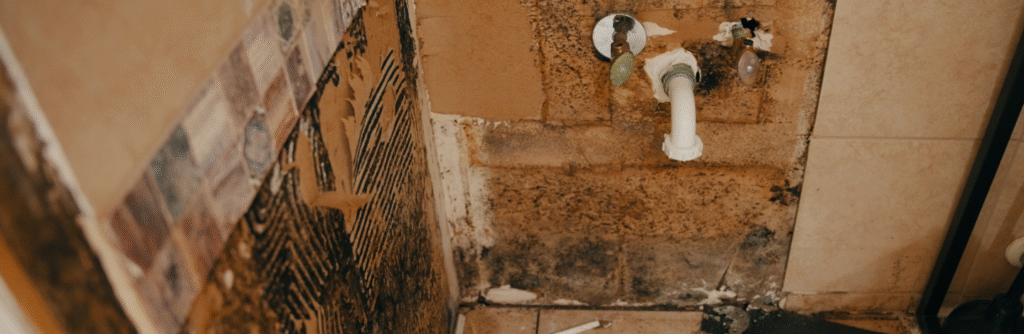
This is where timing matters. The EPA advises that damp or wet building materials and furnishings be cleaned and dried within 24 to 48 hours to prevent mold growth. A leak that starts the day after you leave for a weeklong trip has already passed that window by the time you find it.
That isn’t a reason to panic. It’s a reason to act promptly. If you find water, a leak or soaked flooring when you get home, call our sister company, Ram Restoration, which handles water damage and drying. Ram Restoration’s travel post (R11) covers the plumbing and water-shutoff steps to take before you leave. Once the water side is handled, if you notice a lingering musty smell or discoloration in the days that follow, an assessment can tell you whether there’s growth and where the moisture came from.
Pack the bags, set the thermostat, open the doors and enjoy the trip. If something smells or looks off when you get back, we’re glad to take a look: 888-609-6653 or www.rammoldpro.com
Dealing with water, fire or storm damage? Contact our sister company, Ram Restoration, at www.ramrestorationusa.com/contact/
Related reading
- Is Your Thermostat Setting Creating Mold Risk While You’re Away?
- Why Do Holiday Decorations Smell Musty Coming Out of Storage?
- Why Do Ohio Basements Get Musty In July Even Without A Flood?
- All Ram Mold Pro articles
FAQ’s
What temperature should you leave the heat at when you’re away in winter?
The American Red Cross recommends keeping the heat set no lower than 55 degrees Fahrenheit when you’ll be away in cold weather.
What indoor humidity level helps prevent mold?
The EPA recommends indoor relative humidity below 60 percent, and ideally between 30 and 50 percent.
How quickly do wet materials need to be dried to prevent mold?
The EPA advises drying damp or wet building materials and furnishings within 24 to 48 hours to prevent mold growth.
Sources: American Red Cross, “Frozen Pipes”; U.S. Environmental Protection Agency, “A Brief Guide to Mold, Moisture and Your Home”