The biggest cooking day of the year is almost here. Pots of potatoes are boiling, the turkey is roasting, the stuffing is steaming and, in most Miami Valley homes, every window in the house is shut against the November cold. All of that cooking puts real moisture into the air, and how much of it stays in the house depends largely on one appliance most people barely think about: the range hood.
How much moisture does cooking actually add to a home?
More than most people expect, especially on a day built around boiling, simmering and roasting for a crowd. University of Florida IFAS Extension lists cooking alongside showering, dishwashing and laundry as everyday sources of indoor moisture, and notes that people themselves are part of the equation: each person produces about three pints of water every day just by breathing. A house full of holiday guests, a kitchen running from morning until dinner and a dishwasher cycling afterward all add up in a home that is closed tight for the season.
None of that is a problem on its own. Homes are built to handle everyday moisture. The issue is where that moisture goes once it leaves the pot, and whether it has a way out of the house.
Why does it matter more in November than in July?
Because of temperature. In summer, windows are often open and the walls, windows and corners of a house are warm. In late fall, exterior surfaces are colder, and warm, moist air from the kitchen condenses on the coldest surface it can find, which is why kitchen windows fog up on cooking days. We covered the science behind that in our posts on the dew point rule (Blog 14) and why windows sweat in fall (Blog 22). The short version: when moist air meets a cold surface often enough, that surface stays damp, and lasting dampness is what mold needs.
The U.S. Environmental Protection Agency’s guidance is straightforward on this point. In “A Brief Guide to Mold, Moisture and Your Home,” the EPA recommends keeping indoor humidity below 60 percent, and ideally between 30 and 50 percent, and advises homeowners to “use exhaust fans or open windows whenever cooking, running the dishwasher or dishwashing.”
Is every range hood actually removing moisture?
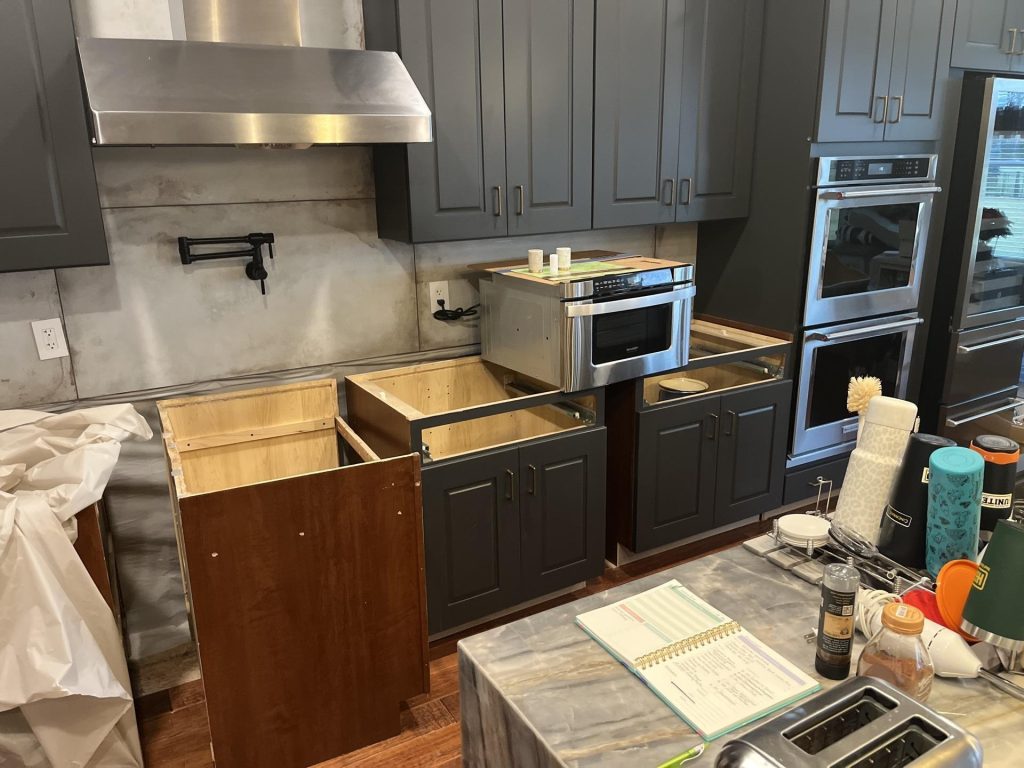
Not necessarily, and this is the part many homeowners don’t know. There are two basic types of range hood. A ducted hood pulls air from the cooktop and sends it through a duct to the outdoors. A recirculating, or ductless, hood pulls air through a filter and blows it back into the kitchen.
The U.S. Department of Energy’s Building America Solution Center draws a clear distinction between them: kitchen exhaust fans ducted outdoors remove “odors and moisture from cooking,” while recirculating units “only filter the air and return it to the kitchen.” A recirculating hood can help with grease and some odors, but the water vapor from that stockpot goes right back into the room. The EPA makes the same point, recommending that stoves and other moisture-producing appliances be vented “to the outside where possible.”
How can you tell which kind of range hood you have?
A few quick checks:
- Look for a vent cap or louvered cover on an exterior wall or the roof line in line with the kitchen. A ducted hood has to exhaust somewhere.
- Look inside the hood. A visible duct opening above the fan usually means it vents out; a charcoal filter panel with no duct usually means it recirculates.
- If your fan is built into an over-the-range microwave, check how it was installed. Some are set up to recirculate rather than vent outdoors.
- Hold a piece of tissue near the hood with the fan running. It should pull firmly toward the fan.
If your hood recirculates, it isn’t a crisis. It simply means the kitchen needs another way to move moisture out on heavy cooking days. And if you’re planning a kitchen update down the road, it’s worth asking whether a ducted hood is an option for your layout.
What should you do on Thanksgiving to keep kitchen moisture in check?
Simple habits make the difference:
- Turn the range hood on before you start cooking, not after the kitchen is already steamy.
- Leave the hood running for a while after the cooking is done, while pots cool and the dishwasher runs.
- Put lids on pots when you can. Less steam escapes, and food heats faster.
- If your hood recirculates, crack a window for a few minutes during the heaviest boiling, or run a bathroom exhaust fan nearby to help move air.
- Wipe down a fogged window afterward rather than letting the water sit on the sill.
- Clean or replace hood filters before the holiday so the fan can move air properly.
What should you watch for after the holidays?
The kitchen gives early clues when moisture isn’t leaving the way it should. Watch for windows that fog every time you cook and stay wet afterward, peeling paint or discoloration on the ceiling above the stove, a musty smell inside upper cabinets on exterior walls, or dark spots in the corners of the kitchen ceiling. Any of these is a sign that moisture is lingering, and it’s worth finding out why before winter settles in.
If a musty smell or staining shows up and you aren’t sure what’s behind it, an assessment can identify whether there’s growth and, more importantly, where the moisture is coming from. If the source turns out to be a leak or water damage, our sister company, Ram Restoration, handles that side.
Enjoy the cooking, enjoy the company, and give the range hood a job this year. If something in the kitchen smells or looks off once the holidays wind down, we’re glad to take a look: 888-609-6653 or www.rammoldpro.com
Dealing with water, fire or storm damage? Contact our sister company, Ram Restoration, at www.ramrestorationusa.com/contact/
Related reading
- Does Closing Your Windows for the Season Quietly Raise Your Indoor Mold Risk?
- Why Does Mold Keep Showing Up Behind The Shower Even Though The Bathroom Looks Clean?
- Is Your Bathroom Fan Actually Running Long Enough to Matter?
- All Ram Mold Pro articles
FAQ’s
How much moisture does a person add to the air just by breathing?
Each person produces about three pints of water per day just by breathing, per University of Florida IFAS Extension.
What indoor humidity level helps prevent mold?
The EPA recommends keeping indoor relative humidity below 60 percent, and ideally between 30 and 50 percent.
What does the EPA recommend to control moisture while cooking?
The EPA advises using exhaust fans or opening windows whenever cooking or dishwashing, and venting stoves to the outside where possible.
Is a recirculating range hood as good as a ducted one for moisture?
The DOE’s Building America Solution Center notes that recirculating hoods “only filter the air and return it to the kitchen,” while ducted fans remove cooking moisture outdoors.
Sources: U.S. Environmental Protection Agency, “A Brief Guide to Mold, Moisture and Your Home”; U.S. Department of Energy, Building America Solution Center, “Kitchen Exhaust Fan”; University of Florida IFAS Extension, “Moisture Control in Your Home, Part 1: The Basics” (FCS3256)