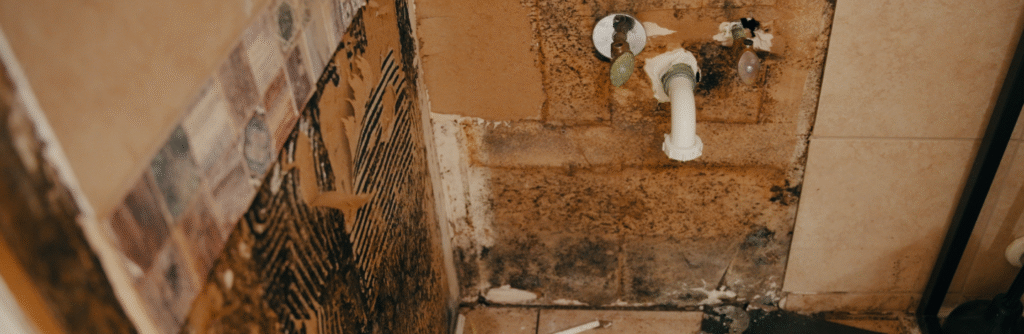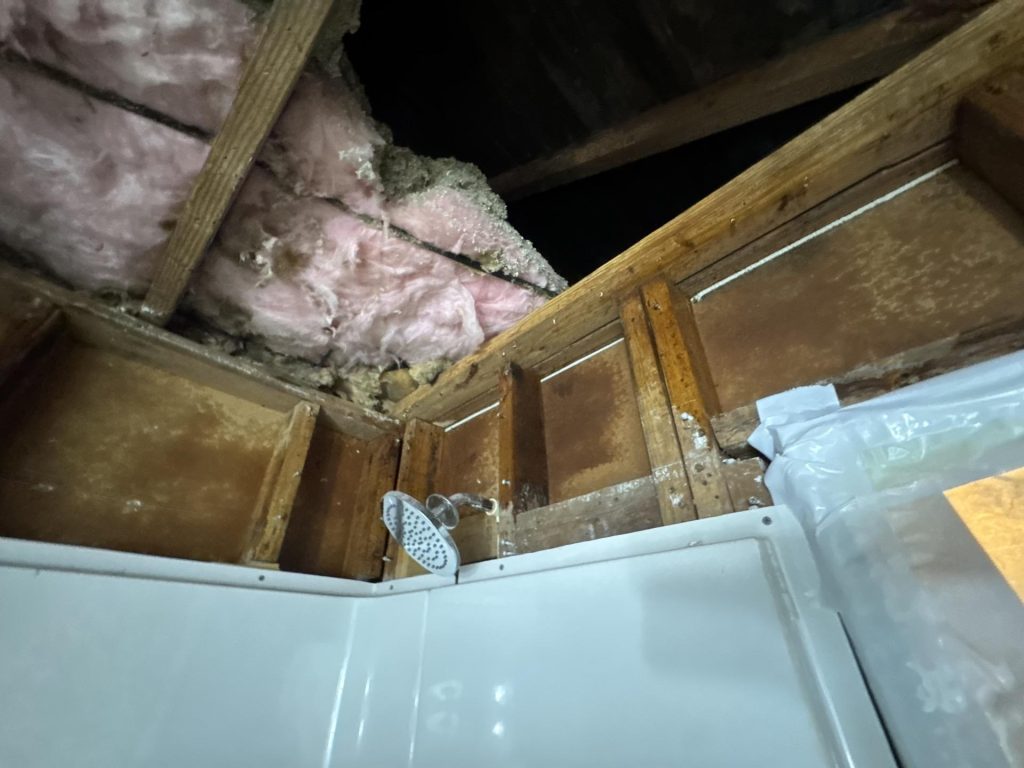
A bathroom can look completely clean and still have a mold problem, because most of what actually causes it isn’t happening on the surface, it’s happening inside the wall every time the shower runs.
A five-minute shower puts about half a pint of water vapor into the air of a bathroom. Some of that gets pulled out by the exhaust fan, but the shower surround sits right against drywall, framing, and insulation that don’t get the airflow the tile does. If the fan isn’t strong enough for the room, or worse, vents into the attic instead of outside, that moisture doesn’t leave the house, it just moves into the wall behind the shower and stays there.
That gap matters because by the time discoloration shows up along the edge of the tub or shower, or a musty smell shows up in the room, the wall behind it has often been damp for a while already. The EPA also notes mold exposure is linked to allergy-type symptoms in sensitive individuals, general reason enough to treat a bathroom’s ventilation as more than a comfort feature.
The fix starts with confirming your fan is actually rated for the room and vented outdoors rather than into an attic or crawl space, and running it well after you’re done showering, not just during. Ram Mold Pro provides mold assessment and remediation services for homes throughout the Dayton, Ohio area, including checking the areas behind tub and shower surrounds that a bathroom fan alone can’t reach.
A question we hear often: isn’t a bathroom fan enough to prevent this? A fan clears humidity out of the room’s air, which helps, but it doesn’t do anything for moisture already sitting inside the wall behind a shower or tub, and if that fan vents into the attic instead of outside, it can add to the problem instead of solving it.
By the numbers:
- A five-minute shower puts about half a pint of water vapor into a bathroom’s air
- Bathroom exhaust fans should vent outdoors, not into an attic, crawl space, or space between floors
- Indoor relative humidity is best kept between 30-50%, and below 60% at all times
Sources: U.S. Department of Energy, Building America Solution Center; U.S. Environmental Protection Agency, “A Brief Guide to Mold, Moisture, and Your Home”
If you’re not sure what’s behind your own shower or tub surround, we can find out without guessing: 888-609-6653 or www.rammoldpro.com