It’s a fair question, and also one where a lot of marketing gives a confident-sounding, generic answer, “usually three to seven days,” without actually explaining where that number comes from. Here’s the honest version: there isn’t a universal number, and understanding why is more useful than a made-up one.
Why won’t a real answer just give you a number?
Because the industry’s own classification system for mold-contaminated spaces determines the scope of work more than the calendar does. The ANSI/IICRC S520 standard defines Condition 1 as normal fungal ecology, essentially a baseline indoor environment, Condition 2 as an indoor environment with settled spores or other contamination on surfaces or in the air, and Condition 3 as actual mold growth. A space’s condition classification, not just its square footage, determines what containment, removal, and drying steps a project actually requires, and those requirements are what drive the real timeline, not a generic day count that applies regardless of what’s actually being addressed.
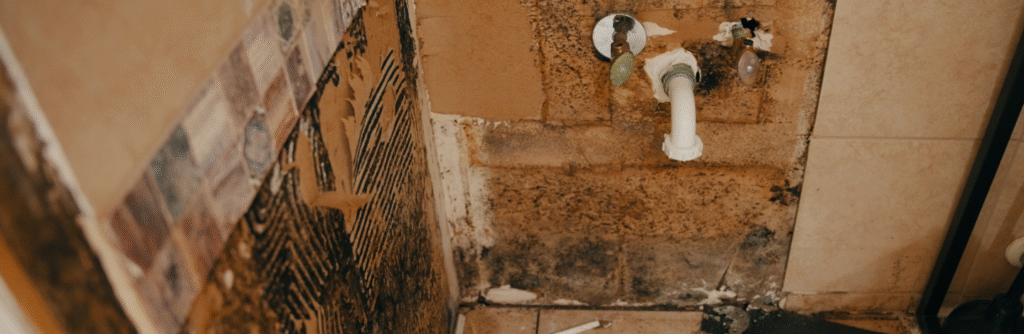
A small Condition 3 finding in an easily accessible, well-ventilated space is a genuinely different project than a similarly sized finding in a finished basement requiring full containment, negative air pressure, and multi-day drying verification before the space can be cleared. Treating both as “a mold job” and quoting the same timeframe for each isn’t accuracy, it’s a guess dressed up as a number.
So what should someone actually ask instead of “how many days”?
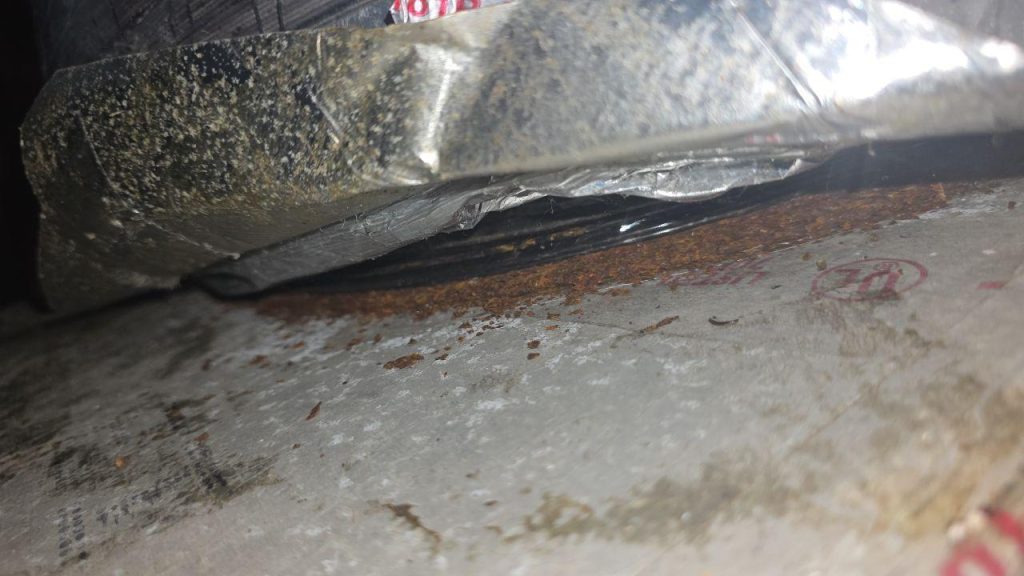
Ask what specific factors are driving the estimate for their situation: what condition classification applies, what containment method the project requires, how much of the affected material needs physical removal versus cleaning, and what drying verification has to happen before the space is considered cleared. A contractor who can answer those specifics is giving a real estimate. A flat number quoted before anyone has actually assessed the space, including a mechanical area like the one pictured here where accessibility itself affects the timeline, is at best an average pulled from unrelated past jobs, and at worst just a sales tactic dressed up as expertise.
None of this means timelines are unknowable, they’re genuinely knowable, just not until someone has actually looked at the specific space, its contamination level, and its containment needs. That’s not a hedge, it’s the honest version of an answer that a lot of competitor marketing skips past in favor of a tidy, uncited number that sounds reassuring and means very little.
Want a real, specific estimate instead of a generic one? 888-609-6653 or www.rammoldpro.com
Dealing with water, fire or storm damage? Contact our sister company, Ram Restoration, at www.ramrestorationusa.com/contact/
Related reading
- Is “Mold Removal” Actually a Real Thing?
- The New MOLD Act Sets the Bar Higher. Ram Mold Pro Was Already There.
- Does a Home’s Square Footage Actually Change How a Mold Problem Should Be Handled?
- All Ram Mold Pro articles
FAQ’s
How is mold contamination classified?
ANSI/IICRC S520 classifies mold-contaminated spaces into three conditions, from normal fungal ecology (Condition 1) to actual mold growth (Condition 3), each requiring different scopes of work.
What determines how long mold remediation takes?
Containment method, material removal versus cleaning, and drying verification are the actual variables that determine a remediation project’s timeline.
Can you trust a remediation timeline given before an assessment?
A flat, generic timeline estimate given before an actual assessment reflects an average from unrelated jobs, not the specific project in question.
Sources: ANSI/IICRC S520-2024, Standard and Reference Guide for Professional Mold Remediation