
Not every mold finding calls for the same response, and one of the more useful, concrete distinctions comes straight from the EPA’s own consumer guidance: size.
Is there an actual number, or is this just a judgment call?
There’s an actual number. The EPA’s guidance states plainly: “If the moldy area is less than about 10 square feet (less than roughly a 3 ft. by 3 ft. patch), in most cases, you can handle the job yourself.” That’s a specific, usable threshold, not a vague suggestion to use your best judgment, and it’s worth knowing exactly what it does and doesn’t cover.
Ten square feet is a small patch, smaller than most people picture when they think about “a mold problem.” A stretch of baseboard, a section of drywall around a window, a portion of a bathroom ceiling, these can all fall under that threshold individually, which is part of why the number matters: it’s easy to underestimate how much square footage a scattered but connected problem actually adds up to once it’s measured rather than eyeballed.
What actually changes once a finding is bigger than that?
Past that roughly 10-square-foot mark, EPA guidance shifts toward recommending professional remediation rather than DIY cleanup, for reasons that go beyond simply “more mold, more work.” A larger contaminated area means more disturbed material generating airborne spores during cleanup, a higher chance the growth has spread further than what’s visible on the surface, and a real possibility that a problem this size reflects an ongoing moisture issue rather than an isolated incident. Handling a larger area without the right containment can spread contamination into previously unaffected parts of a home, turning a contained problem into a distributed one.
The number also gives homeowners a way to describe a finding accurately when figuring out what kind of response actually fits. “About the size of a cutting board” and “about the size of a card table” point toward genuinely different next steps, and having an actual reference point, rather than “kind of a lot” or “not too bad,” makes that first conversation considerably more useful, whether it’s with a remediation company or just a decision about whether to tackle it personally.
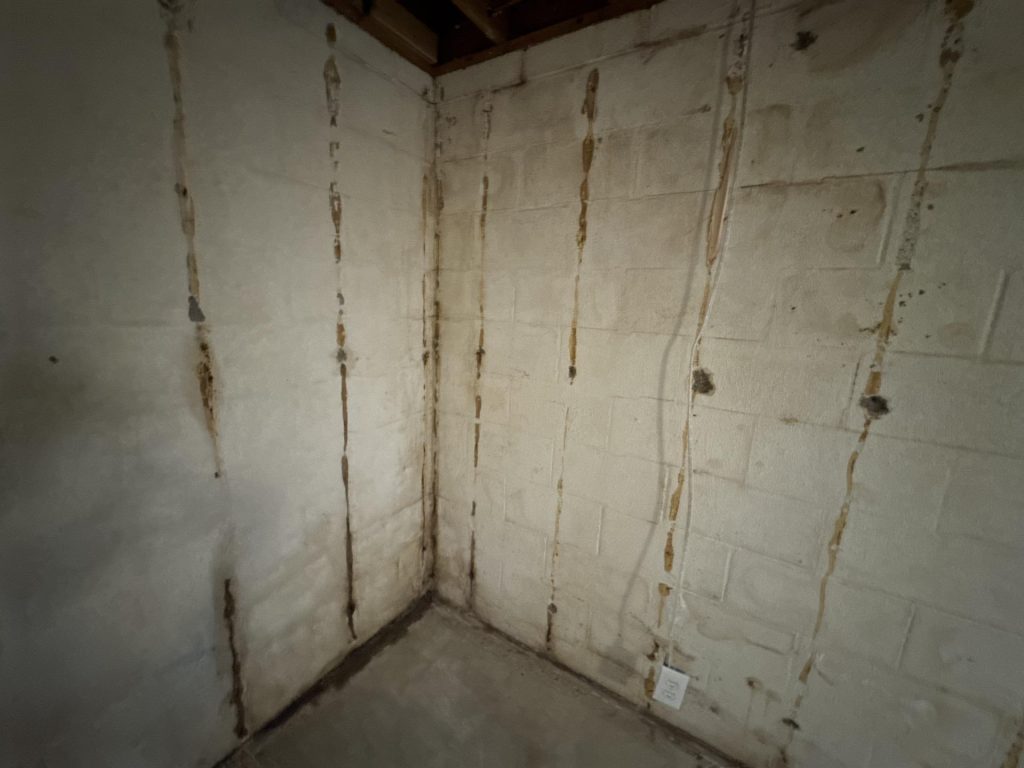
None of this is a reason to measure a finding down to the inch before deciding what to do. It’s a reason to know that “how big is it” isn’t a rhetorical question here, it’s the specific detail EPA’s own guidance treats as the dividing line for what happens next, and a basement corner like the one pictured here, with staining spread across multiple wall sections, is exactly the kind of finding worth actually measuring rather than eyeballing.
Not sure which side of that line your situation falls on? 888-609-6653 or www.rammoldpro.com
Dealing with water, fire or storm damage? Contact our sister company, Ram Restoration, at www.ramrestorationusa.com/contact/
Related reading
- When Is Mold a DIY Job, and When Do You Need a Professional?
- What Does a Real Rental-Housing Mold Standard Actually Require?
- How Long Does a Mold Remediation Project Actually Take?
- All Ram Mold Pro articles
FAQ’s
How much mold can you clean up yourself?
EPA guidance recommends that mold-affected areas smaller than about 10 square feet (roughly a 3×3 ft. patch) can typically be handled without professional remediation.
When should you call a professional for mold?
Beyond that threshold, EPA guidance shifts toward recommending professional remediation due to airborne spore risk and the likelihood of hidden spread.
Do small mold spots add up?
A scattered set of smaller mold-affected spots can add up to more total square footage than it initially appears.
Sources: U.S. Environmental Protection Agency, “A Brief Guide to Mold, Moisture, and Your Home”
Pingback: iphone duo case