Once the furnace kicks on for the season, a lot of Dayton-area homes start to feel dry. Static shocks, dry skin, a scratchy feeling in the morning. A humidifier is the obvious fix, and used well, it’s a perfectly good one. The catch is that humidifiers don’t know when to stop. They’ll keep adding moisture to the air whether the room needs it or not, and a home that’s too humid in winter can create the same moisture problems people work so hard to avoid in summer.
What humidity level should you aim for indoors?
The U.S. Environmental Protection Agency recommends keeping indoor humidity between 30 and 50 percent, and below 60 percent at all times. For humidifier use specifically, the EPA’s guidance on home humidifiers is more direct: keep relative humidity from going above 50 percent.
That’s a useful number to hold onto because it’s lower than many people expect. The goal isn’t to make the house feel like a summer afternoon. It’s to take the edge off very dry winter air while keeping humidity in the range where moisture doesn’t build up on cold surfaces.
How do you know if a humidifier is running too high?
The simplest signal is your windows. The EPA’s humidifier guidance points to condensation on windows, walls or pictures as a sign that humidity is too high and the humidifier should be turned down or used less. Windows are usually the coldest surfaces in a room, so they’re the first place extra moisture shows up.
The more precise approach is a hygrometer, an inexpensive digital humidity meter. Put one in the room where the humidifier runs, ideally not right next to it, and check it at different times of day. If it’s creeping above 50 percent, turn the humidifier down or off for a while. Many humidifiers have a built-in humidistat, but a separate meter is a good way to check that it’s accurate.
Why is too much humidity a bigger deal in winter?
Because winter makes the inside surfaces of a house colder. Exterior walls, window frames, closet corners and the spaces behind furniture against outside walls can all run several degrees cooler than the middle of the room. When warm, humid indoor air reaches those surfaces, it can cool to the point where moisture condenses on them.
The EPA notes that the key to mold control is moisture control, and lists condensation on cold surfaces as one of the signs of high indoor humidity. That’s why a humidifier running all night in a closed bedroom can leave windows dripping by morning, even when the rest of the house feels fine.
Does the humidifier itself need attention?
Yes, and this is the part people most often skip. The EPA’s humidifier guidance notes that microorganisms can grow in humidifier tanks and that the devices need regular care. Its recommendations are practical:
- Empty the tank, dry it and refill it with fresh water daily rather than topping it off.
- Clean the humidifier every third day, following the manufacturer’s directions.
- Use distilled or demineralized water when possible. Tap water contains minerals that can build up in the unit.
- Change any filters or wicks as often as the manufacturer recommends.
- At the end of the season, clean the unit thoroughly and store it completely dry.
A clean humidifier set to a sensible level is a good tool. A neglected one running around the clock isn’t doing your indoor air quality any favors.
What about whole-house humidifiers on the furnace?
The same principles apply, just at a larger scale. Whole-house units usually have a control near the thermostat or on the furnace itself. On very cold nights, many homeowners find they need to turn the setting down to keep windows from fogging, since the colder it is outside, the less moisture indoor surfaces can handle. If you’re not sure how yours is set or when it was last serviced, it’s worth asking your heating contractor at the next tune-up.
Where should you put a portable humidifier?
Somewhere it can mix with the room’s air: on a raised surface, away from walls, curtains and furniture, and not aimed at windows or exterior walls. Avoid running one in small, closed spaces like closets, and be careful about using them in basements. Most basements in the Miami Valley are the one part of the house that rarely needs more moisture, even in winter.
When should you have the house looked at?
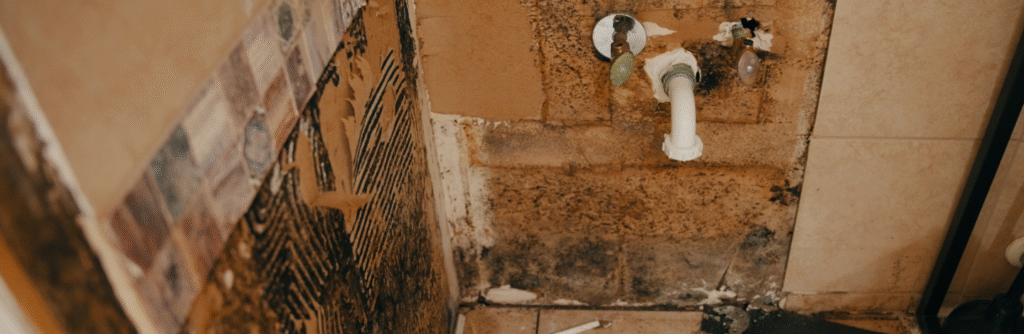
If you’ve turned the humidifier down and windows still fog every morning, if you’re seeing dark spotting around window frames or in closet corners on exterior walls, or if there’s a musty smell in rooms where a humidifier has been running for several winters, a professional assessment can sort out what’s going on. Sometimes the answer is just a better setting and a hygrometer. If the moisture turns out to come from a leak or water intrusion, our sister company, Ram Restoration, handles that side of the work.
If you’re running a humidifier this winter and the windows are telling you something, we’re happy to take a measured look: 888-609-6653 or www.rammoldpro.com
Dealing with water, fire or storm damage? Contact our sister company, Ram Restoration, at www.ramrestorationusa.com/contact/
Related reading
- Does Closing Your Windows for the Season Quietly Raise Your Indoor Mold Risk?
- Why Do Holiday Decorations Smell Musty Coming Out of Storage?
- Is Your Thermostat Setting Creating Mold Risk While You’re Away?
- All Ram Mold Pro articles
FAQ’s
What indoor humidity is recommended when running a humidifier?
The EPA recommends indoor humidity between 30 and 50 percent, and below 60 percent at all times.
How high should you let a humidifier raise the humidity?
The EPA’s home humidifier guidance advises keeping relative humidity from rising above 50 percent.
How often should a portable humidifier be cleaned?
The EPA recommends emptying, drying and refilling portable humidifiers daily and cleaning them every third day.
What are signs that indoor humidity is too high?
The EPA lists condensation on windows, walls or pictures as a sign humidity is too high.
Sources: U.S. Environmental Protection Agency, “Use and Care of Home Humidifiers”; U.S. Environmental Protection Agency, “A Brief Guide to Mold, Moisture and Your Home”