For a lot of Dayton-area homeowners, the basement dehumidifier is a summer appliance. It runs from May through September, empties into the floor drain, and then gets switched off around the same time the air conditioner does. Sometimes that’s exactly right. Sometimes it isn’t. The good news is you don’t have to guess. A few minutes with an inexpensive humidity meter will tell you which group your basement is in.
Do basements still get humid in the late fall and winter?
Many do, at least for part of the season. Outdoor air holds less moisture as it gets colder, and once the furnace is running steadily, much of the house dries out. But basements are different from the rest of the house. They sit partly below ground, surrounded by soil that stays damp through the fall, and their walls and floors stay cool.
The Miami Valley’s fall weather adds to that. According to National Weather Service climate normals for Dayton, October averages about 2.95 inches of precipitation and November about 3.07 inches. That’s a steady supply of moisture in the ground around the foundation at the same time many people switch the dehumidifier off.
What humidity should a basement stay at?
The same target as the rest of the house. The U.S. Environmental Protection Agency recommends keeping indoor humidity below 60 percent, ideally between 30 and 50 percent, and says to use a dehumidifier when needed to get there. The EPA also notes that the key to mold control is moisture control.
So the real question isn’t what month it is. It’s whether your basement is staying below 60 percent without help.
How do you know whether to keep it running?
Measure. Put a digital hygrometer in the basement, away from the dehumidifier and not right next to the furnace, and check it over a week or two after you switch the dehumidifier off.
- If the basement stays comfortably below 50 percent on its own, it’s reasonable to leave the dehumidifier off for the season and keep an eye on the meter.
- If it drifts into the 50s, you can run the dehumidifier on a lower setting or part-time.
- If it climbs past 60 percent, keep the dehumidifier running.
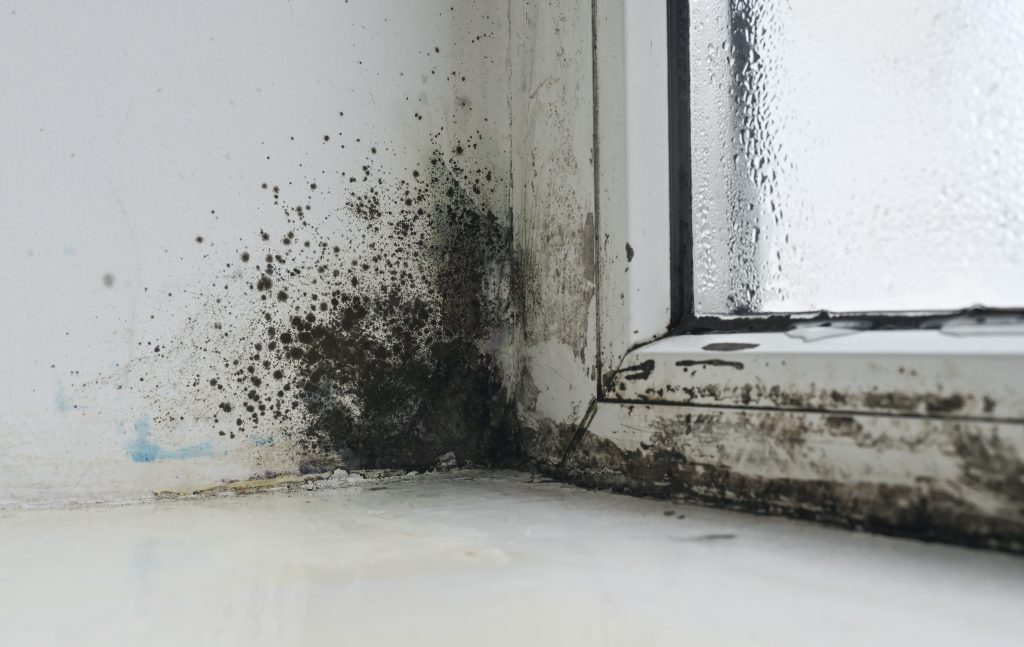
Other signs that a basement still needs help include condensation on cold-water pipes, ductwork or the inside of basement windows, which the EPA lists as indicators of high humidity, along with a musty smell that comes back once the space has been closed up for a while.
Will a dehumidifier work in a cold basement?
That depends on the unit. Many portable dehumidifiers are designed for typical room temperatures, and their coils can frost over if a basement gets cold. Check your owner’s manual for the minimum operating temperature and whether the unit has an automatic defrost feature. In most heated or partly heated Dayton-area basements, this isn’t an issue, but it’s worth knowing before you count on the unit through January.
How do you keep the cost down if you run it all year?
Two ways. First, use the built-in humidistat instead of running the unit constantly. Set it around 50 percent and it’ll cycle on only when needed. Second, if you’re replacing an older unit, ENERGY STAR notes that certified dehumidifiers are about 15 percent more energy-efficient than standard models.
ENERGY STAR also makes a point worth repeating: a dehumidifier treats the symptom. It notes that improving drainage around the foundation helps lower basement humidity in the first place. Gutters that drain well away from the house, downspout extensions and soil that slopes away from the foundation can all reduce how hard the dehumidifier has to work.
What about the basement humidifier question?
If the upstairs feels dry this winter and you’re running a humidifier, keep it upstairs. As we covered in our post on humidifier settings, the EPA recommends keeping humidity from going above 50 percent when you run one. Basements rarely need the extra moisture, even in January.
When is it time to get a professional opinion?
If the basement stays above 60 percent even with the dehumidifier running, if the unit fills its bucket every day in the middle of winter, or if you’re seeing staining, efflorescence or a persistent musty smell, the dehumidifier is working against something larger. A professional assessment can measure moisture in the walls and floor, track down where it’s coming from and give you a clear, calm plan. If the source turns out to be a leak or water intrusion, our sister company, Ram Restoration, handles that side of the work.
If you’re not sure whether your basement can go without the dehumidifier this winter, we’re happy to take a measured look: 888-609-6653 or www.rammoldpro.com
Dealing with water, fire or storm damage? Contact our sister company, Ram Restoration, at www.ramrestorationusa.com/contact/
Related reading
- Should You Keep Firewood Inside Your House?
- Why Do Ohio Basements Get Musty In July Even Without A Flood?
- The Dayton Fall Transition, By the Numbers, and What It Means Indoors
- All Ram Mold Pro articles
FAQ’s
What humidity should a basement be kept at?
The EPA recommends keeping indoor humidity below 60 percent, ideally between 30 and 50 percent, and using a dehumidifier when needed.
How much rain does Dayton get in October and November?
National Weather Service normals for Dayton show about 2.95 inches of precipitation in October and 3.07 inches in November.
Are ENERGY STAR dehumidifiers more efficient?
ENERGY STAR says certified dehumidifiers are about 15 percent more energy-efficient than standard models.
How else can you lower basement humidity?
ENERGY STAR notes that improving foundation drainage helps lower basement humidity.
Sources: U.S. Environmental Protection Agency, “A Brief Guide to Mold, Moisture and Your Home”; ENERGY STAR, “Dehumidifiers”; National Weather Service, Wilmington, Ohio, Dayton climate normals