The initial cleanup after Cincinnati’s July 17 flash flood, pulling out ruined furniture, running fans, mucking out basements, is mostly done in Oakley, Hyde Park, Madisonville, Pleasant Ridge, and Mt. Lookout. That doesn’t mean the recovery is finished. It means the recovery is entering the phase where mold becomes the thing worth checking for, rather than the water itself.
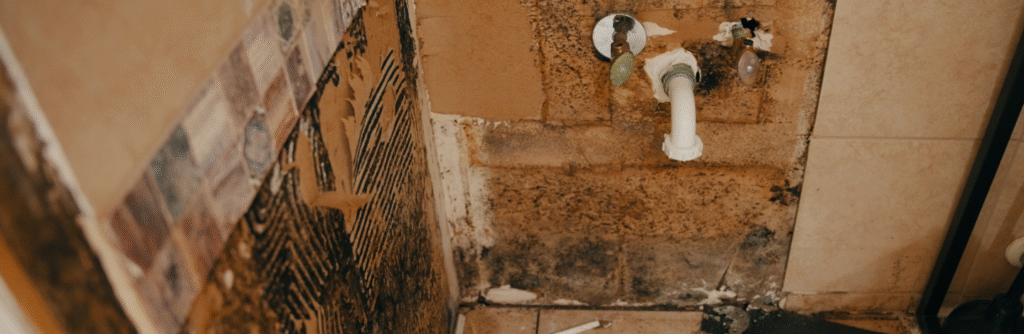
Visible cleanup addresses what was obviously wet: standing water, soaked carpet, ruined drywall that was already coming apart. It doesn’t necessarily catch what stayed damp longer than it looked, insulation behind a wall that wicked moisture from a flooded baseboard, subfloor under vinyl or laminate that trapped water underneath, or a crawl space that never fully dried because nothing was actively pumping air through it. More than a week after the storm, those are exactly the spots where a musty smell or a new spot of discoloration is most likely to show up first.
For homes in the hardest-hit neighborhoods, a useful check at this stage is simple: does anything smell musty that didn’t a week ago, and is there any surface that still feels damp to the touch days after the visible water is gone. Either one is worth a look, especially in a basement, crawl space, or any room that had water on the floor for more than a few hours during the storm.
If it’s been over a week since the water receded and something still smells off, that’s worth a real look, not another round of fans. Call 888-609-6653 or visit www.rammoldpro.com to schedule an assessment.
Dealing with water, fire or storm damage? Contact our sister company, Ram Restoration, at www.ramrestorationusa.com/contact/
Related reading
- Cincinnati Just Had Two Flood Events in Two Weeks. Here’s Why Mold Risk Peaks After the Water’s Gone
- The Ohio River Bumped Up This Week Too. Here’s Why That Still Matters for Basements Near the River
- When Floodwater Comes Through the Sewer System, the Mold Cleanup Is Different Too
- All Ram Mold Pro articles
FAQ’s
How much rain fell in Cincinnati’s July 17 flash flood?
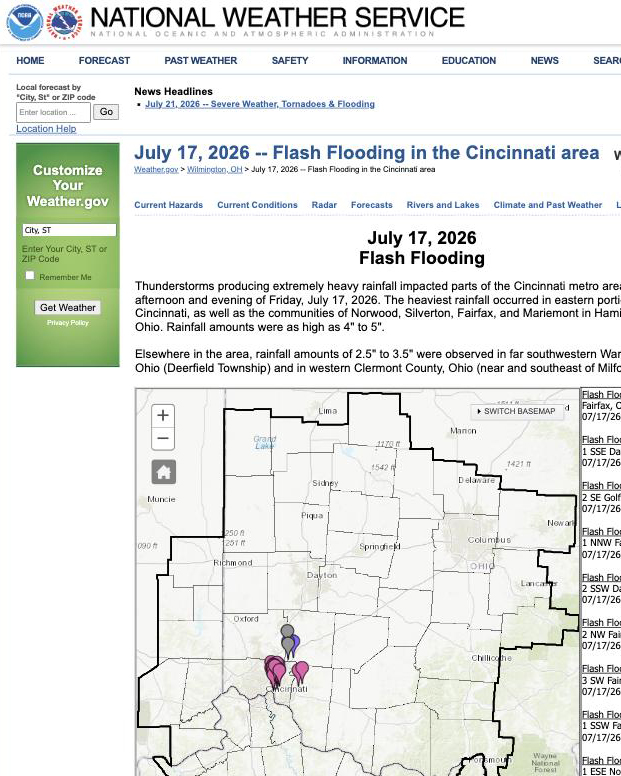
Cincinnati’s July 17 flash flood dropped 5 to 6 inches of rain in about an hour on Oakley, Hyde Park, Madisonville, Pleasant Ridge, and Mt. Lookout, per the National Weather Service.
How quickly can mold grow after flooding?
Mold can visibly colonize a surface within 48 to 72 hours of it staying wet, well within the timeframe of a multi-day flood cleanup.
Which materials stay wet longest after a flood?
Materials that trap moisture without direct airflow, subfloor, insulation, crawl space framing, often stay wet far longer than the visible surface suggests.
Source: National Weather Service Wilmington, OH; Cincinnati Fire Department; general mold-growth timeline guidance