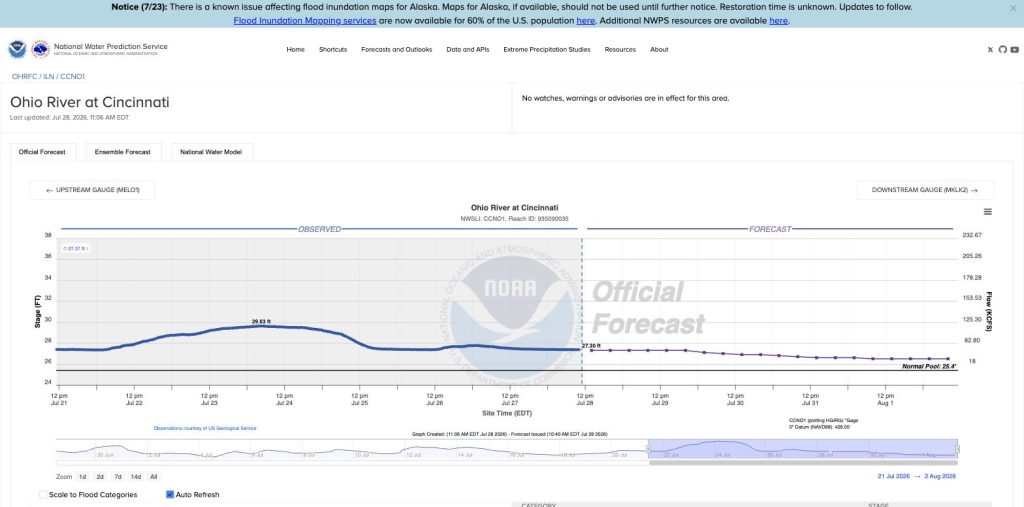
Cincinnati’s East Side was hit twice in less than a week: a flash flood on July 17 that dropped 5 to 6 inches of rain in about an hour on neighborhoods including Oakley, Hyde Park, Madisonville, Pleasant Ridge, and Mt. Lookout, followed by a second round of storms on July 21 that flooded many of the same streets again. The Ohio River responded too, rising from a baseline near 27 feet to a crest of nearly 30 feet in the days that followed, well short of its 52-foot flood stage, and there’s no flood warning in effect on the river as of this week.
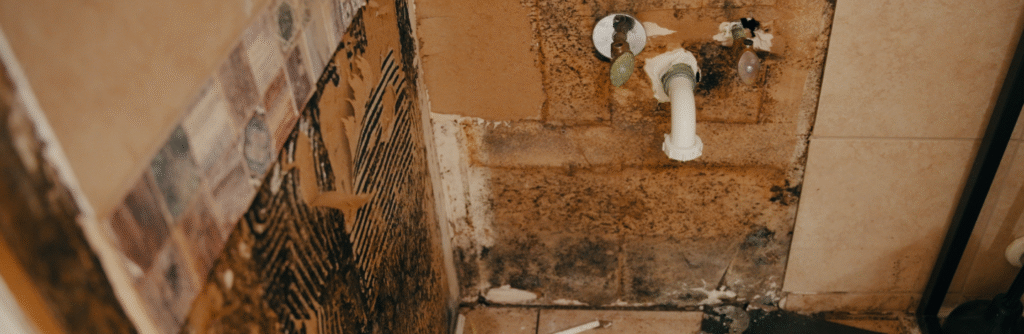
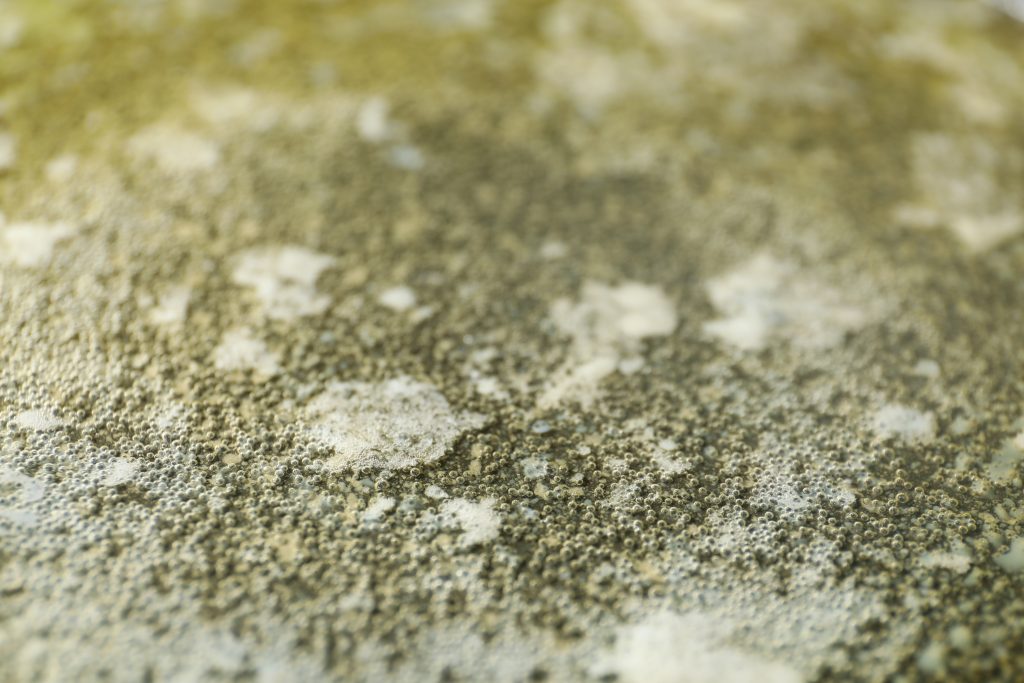
For homeowners and property managers watching the water recede, the instinct is to treat the flood as the event. It isn’t, not entirely. Mold doesn’t need a second storm, or a rising river, to become a second disaster; it needs damp material and a little time. Once a surface, wood framing, drywall, insulation, gets wet, mold spores already present in the air and on the material can begin activating within 24 hours. Somewhere between 24 and 48 hours, that growth starts putting down roots into porous material, which is the point where simply drying the area out stops being enough on its own. By 48 to 72 hours, visible colonies can appear, and if a building’s HVAC system was running, or gets turned back on, it can spread spores well beyond where the water actually reached.
That timeline is why the days right after a flood matter more than the flood itself, and why nearly two weeks of repeated wet weather, even without every event reaching flood stage, adds up to more saturated ground and more time for mold to establish than any single storm would on its own.
By the numbers:
- The July 17 storm dropped 5 to 6 inches of rain in about an hour on Cincinnati’s East Side, described by the Metropolitan Sewer District as effectively a 1,000-year rainfall event for the area.
- Mold spores on wet material can begin activating within 24 hours, with roots penetrating porous surfaces like drywall and wood within 24 to 48 hours.
- The Ohio River rose to a crest of nearly 30 feet this week, short of its 52-foot flood stage, on top of two storms in the same two-week stretch.
Source: National Weather Service Wilmington, OH (weather.gov/iln/20260717); Cincinnati Metropolitan Sewer District; NOAA National Water Prediction Service (Ohio River at Cincinnati gauge)
If your home or building took on water from either event and extraction or structural drying is still underway, that’s Ram Restoration’s specialty (937-885-0088). Once things are drying out, or if you’re not sure they’re dry enough, Ram Mold Pro handles the mold-risk side across Cincinnati and the Miami Valley. Call 888-609-6653 or visit www.rammoldpro.com to schedule an assessment.