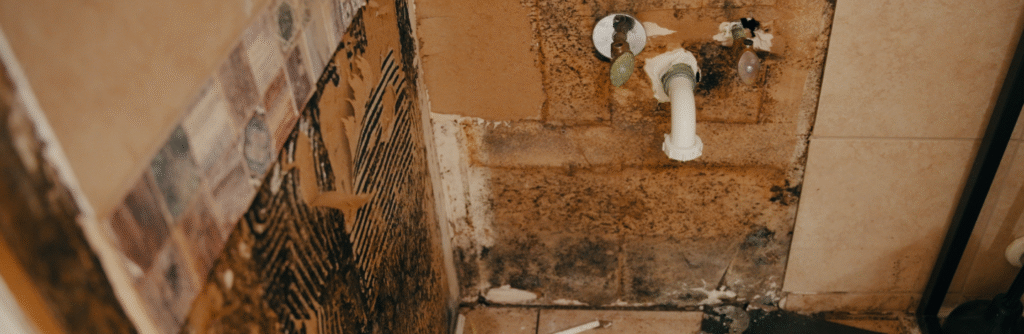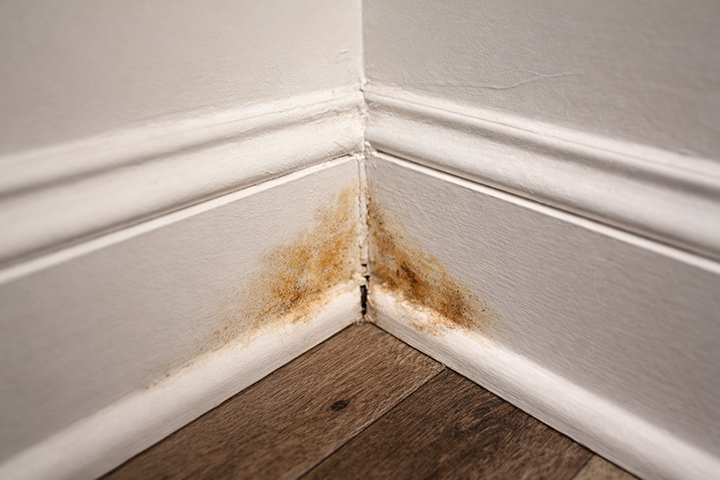
Painting over a mold spot is a tempting shortcut: it covers the discoloration in an afternoon, and the wall looks fixed. The mold underneath doesn’t know the difference, and in some cases, painting over it can make the underlying problem worse, not better.
Standard paint isn’t formulated to kill mold, and it doesn’t address whatever moisture is feeding it. Sealing a damp, mold-affected surface can trap moisture underneath the new paint layer, which gives the mold a humid, dark environment to keep growing in, now hidden from view instead of visible on the surface. EPA guidance is consistent on this point: surfaces should be thoroughly cleaned and dried before any paint is applied, mold should never simply be painted over.
There are paints marketed as “mold-resistant” or containing a mildewcide additive. Those products are formulated to inhibit new mold growth on a clean surface; they aren’t a treatment for mold that’s already established, and they won’t stop growth that’s happening underneath the paint film if moisture is still present.
The telltale sign that this has already happened is paint that bubbles, peels, or discolors again within weeks or months of being applied, often in the same spot that was “fixed.” That’s usually a sign the moisture source, and the mold, were never actually addressed.
By the numbers:
- EPA guidance calls for cleaning and thoroughly drying a surface before painting, mold should not be painted over.
- “Mold-resistant” or mildewcide-treated paints inhibit new growth on a clean, dry surface; they don’t treat mold that’s already established.
- Paint bubbling, peeling, or re-discoloring soon after application is a common sign that moisture and mold were sealed in rather than resolved.
Source: EPA, general mold cleanup and prevention guidance; paint industry guidance on mildewcide-treated products
Already painted over a spot that’s coming back through? That’s a sign the moisture issue is still active. Call 888-609-6653 or visit www.rammoldpro.com to schedule a consultation.