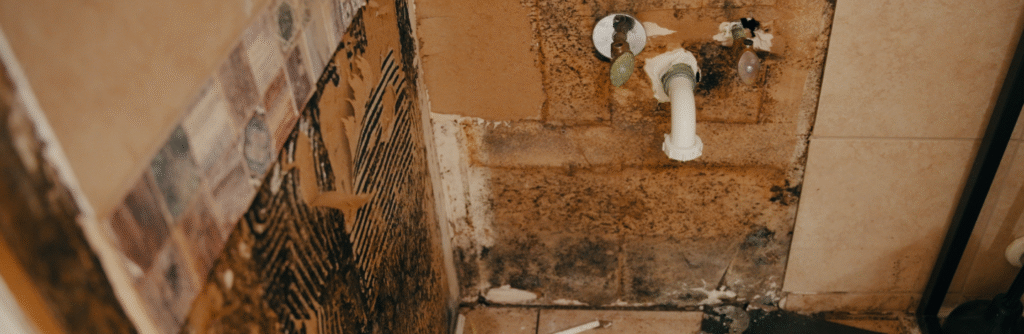
It’s a frustrating pattern: you clean up a patch of mold, it looks gone, and a few weeks or months later it’s back in the same spot, or a spot right next to it. If that’s happened to you, the mold itself wasn’t really the problem, it was a symptom of something else that never actually got fixed.
Mold needs moisture to grow, and cleaning the visible growth doesn’t do anything about whatever is feeding it, a slow leak, condensation, high humidity, or water that got into a wall and never fully dried. Wipe-downs and bleach can lighten or kill mold sitting on a hard, non-porous surface, but they don’t reach roots that have already grown into drywall, wood, or insulation, and they don’t touch the moisture source at all.
That’s why “the mold problem will come back,” in the EPA’s own words, when the water problem behind it isn’t addressed. It’s also why a single spot of mold is often a sign of a larger moisture issue than what’s visible, especially once a space is connected to shared ductwork, where the same conditions can spread room to room rather than staying contained.
Professional remediation follows the IICRC S520 standard specifically because it requires identifying and correcting the underlying moisture source as part of the job, not just removing what’s visible. Ram Mold Pro’s remediation process for homes and businesses across the Dayton, Ohio area is built around that distinction, using EMT (Extreme Microbial Technology) to treat the whole HVAC-connected environment rather than just the one room where mold happened to show up first.
A question we hear often: doesn’t bleach take care of it? Bleach can kill mold sitting on a hard surface, but it doesn’t reach roots grown into porous material, and it does nothing about the moisture that let the mold grow in the first place. That’s why the same spot so often comes back.
By the numbers:
- Cleaning up mold without fixing the moisture source means the problem is likely to return
- Indoor relative humidity is best kept between 30-50%, and below 60% at all times, to limit the conditions mold needs to grow
- Professional remediation under the IICRC S520 standard requires identifying and correcting the underlying moisture source, not just removing visible mold
Sources: U.S. Environmental Protection Agency, “A Brief Guide to Mold, Moisture, and Your Home”; IICRC S520 Standard for Professional Mold Remediation
If your mold keeps coming back, the fix isn’t a stronger cleaner, it’s finding out why: 888-609-6653 or www.rammoldpro.com