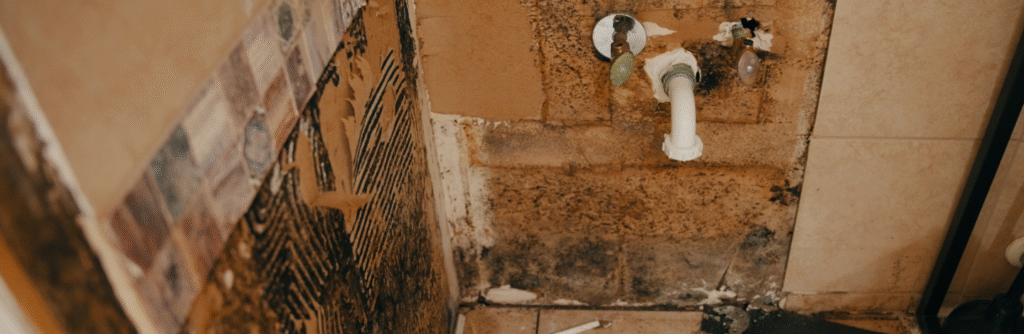
“Black mold” gets treated like its own category of emergency, distinct from and scarier than ordinary mold. Color alone doesn’t tell you nearly as much as the phrase implies, and it isn’t the factor that determines how a situation should be handled.
Black-colored mold can be any of several species, most commonly Cladosporium or Alternaria, and the species often associated with the “toxic black mold” label in media coverage, Stachybotrys chartarum, isn’t the only mold that can appear black, and plenty of black-appearing growth isn’t Stachybotrys at all. Visual color is not a reliable way to identify species without lab analysis.
Public health guidance from the CDC treats this consistently: mold growing indoors should be addressed the same way regardless of its color or species, identify and correct the moisture source, then remove the growth. Species identification through testing is generally not necessary before deciding how to respond to routine indoor mold.
That’s a more useful framework than sorting mold by color: the surface it’s on, how far it’s spread, and whether HVAC systems are involved matter more to the right response than whether the growth happens to look black, green, or white.
Whatever color it is, the response usually starts the same way: find the moisture, then address the mold. Call 888-609-6653 or visit www.rammoldpro.com to schedule a consultation.
Dealing with water, fire or storm damage? Contact our sister company, Ram Restoration, at www.ramrestorationusa.com/contact/
Related reading
- Mold Testing vs. Mold Inspection: What’s the Difference, and Which Do You Need?
- Mold vs. Mildew: What’s Actually the Difference, and Does It Change What You Do?
- How Do You Know If You Have Hidden Mold? Signs, Testing, and When to Call a Pro
- All Ram Mold Pro articles
FAQ’s
Can you identify black mold by its color?
Black-colored mold can be any of several common species; visual color alone doesn’t reliably identify what’s actually growing without lab testing.
Is black mold handled differently?
CDC guidance treats indoor mold consistently regardless of color or species: identify the moisture source, then remove the growth.
Do you need to test mold to know what species it is?
Species-level testing is generally not necessary before deciding how to respond to routine indoor mold.
Source: CDC, general guidance on mold in the environment and building dampness