Renters searching for “Ohio mold law” often land on the assumption that a specific statute spells out exact landlord obligations around mold. It’s worth being precise about what Ohio law actually says, because the honest answer is more nuanced than that, and understanding the real framework is more useful than relying on an oversimplified version of it.
Ohio Revised Code Section 5321.04 is the relevant statute, and it does not mention mold by name. What it does require is broader and, in a practical sense, still directly relevant: landlords must “make all repairs and do whatever is reasonably necessary to put and keep the premises in a fit and habitable condition,” maintain “all electrical, plumbing, sanitary, heating, ventilating, and air conditioning fixtures and appliances” in good working order, and comply with applicable building, housing, health, and safety codes that affect health and safety.
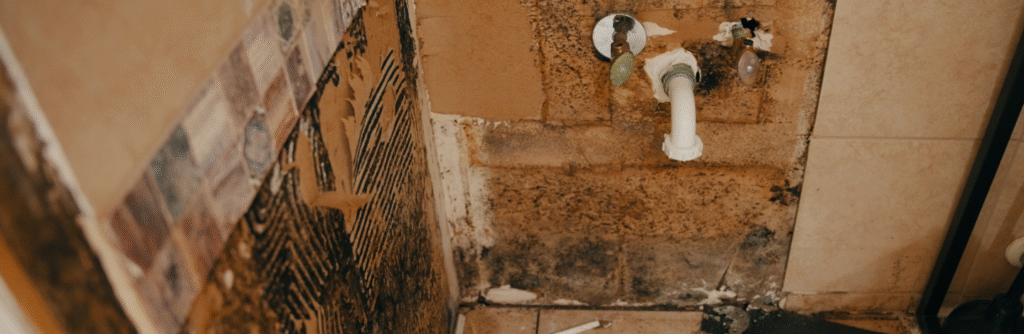
The situation pictured here, a plumbing penetration with active mold staining spreading from around it, falls squarely within that broader habitability and plumbing-maintenance language, even without the statute using the word “mold” anywhere. A landlord’s duty to maintain plumbing fixtures “in good and safe working order” reasonably extends to addressing a plumbing-related moisture source that’s actively causing damage, not just fixing a fixture once it stops functioning entirely.
A question we hear often: if the law doesn’t say “mold” specifically, does that mean a landlord has no real obligation regarding it? Not necessarily. The habitability standard is written broadly enough to cover conditions that make a unit not fit to live in, and chronic, unaddressed moisture and the mold growth that follows it is a reasonable fit for that broader standard, even without a dedicated mold statute. This is genuinely a legal question that depends on specific facts, and it’s worth talking with a legal aid organization or an attorney about a particular situation rather than treating a blog post as legal advice, but the underlying statutory language is real and worth knowing.
Ohio Revised Code Section 5321.07 lays out what a tenant can actually do if a landlord doesn’t meet these obligations after being given proper written notice, generally with a 30-day window: pursuing rent escrow through the local court, seeking a court order compelling repairs, or in some circumstances terminating the lease. Those are real, specific legal remedies, not just informal leverage, though again, the specific process and requirements are worth confirming with an actual legal resource rather than assuming based on a general summary.
It’s worth being direct about what local health departments do and don’t do here too. Dayton & Montgomery County Public Health, for instance, is explicit that it does not independently regulate mold and instead defers to general EPA guidance on the subject. That means the habitability statute, imperfect and non-mold-specific as it is, is functionally the primary legal framework renters and landlords in this area actually have to work with, rather than a dedicated local mold ordinance filling that gap.
None of this changes the practical reality that a moisture source like the one pictured here needs to be identified and addressed regardless of how the legal conversation goes. But understanding the actual statutory language, rather than an inflated or oversimplified version of “Ohio mold law,” puts both renters and landlords in a better position to have that conversation accurately.
If a plumbing-related moisture issue needs a real assessment, we can help: 888-609-6653 or www.rammoldpro.com
Dealing with water, fire or storm damage? Contact our sister company, Ram Restoration, at www.ramrestorationusa.com/contact/
Related reading
- Is Your Landlord Responsible for Mold in Your Apartment?
- What Does Ohio’s Own Property Disclosure Form Actually Ask About Mold?
- What Does a Real Rental-Housing Mold Standard Actually Require?
- All Ram Mold Pro articles
FAQ’s
What does Ohio law require landlords to maintain?
Ohio Revised Code 5321.04 requires landlords to maintain rental premises in a “fit and habitable condition” and keep plumbing and HVAC systems in “good and safe working order,” though the statute does not mention mold by name.
What can Ohio tenants do if a landlord won’t make repairs?
Ohio Revised Code 5321.07 provides tenant remedies, including rent escrow, a court order for repairs, or lease termination, generally following a 30-day written notice period.
Does Dayton & Montgomery County Public Health regulate mold?
Dayton & Montgomery County Public Health has stated it does not independently regulate mold and defers to general EPA guidance on the subject.
Sources: Ohio Revised Code, Sections 5321.04 and 5321.07; Dayton & Montgomery County Public Health, indoor air/mold guidance