Buying or selling a home in Ohio means filling out the state’s Residential Property Disclosure Form, and mold shows up on it directly, in language worth reading closely rather than skimming past.
What does the form actually ask, word for word?
Under its water intrusion section, Ohio’s official Residential Property Disclosure Form asks sellers: “Have you ever had the property inspected for mold by a qualified inspector?” with a straightforward yes-or-no checkbox. That’s a narrower question than it might first appear, since it asks about a past inspection, not whether mold is present now. A seller who’s never had the property inspected can honestly answer “no” even in a home with a real, undiscovered mold issue, a meaningful limitation to understand on either side of a transaction.
The same section separately asks about “water or moisture related damage to floors, walls or ceilings as a result of flooding; moisture seepage; moisture condensation; ice damming; sewer overflow/backup; or leaking pipes, plumbing fixtures, or appliances,” which captures a lot of the conditions that actually produce mold, even in a section that doesn’t use the word “mold” itself.
Does the form guarantee a buyer is getting the full picture?
Not entirely, and the form itself says so. It includes an explicit note: “Purchaser is advised that every home contains mold. Some people are more sensitive to mold than others.” That’s worth sitting with: the form isn’t promising a mold-free home, and it isn’t a substitute for an inspection, it’s a seller’s disclosure of what they personally know, based on their own awareness, not the results of testing they weren’t required to commission.
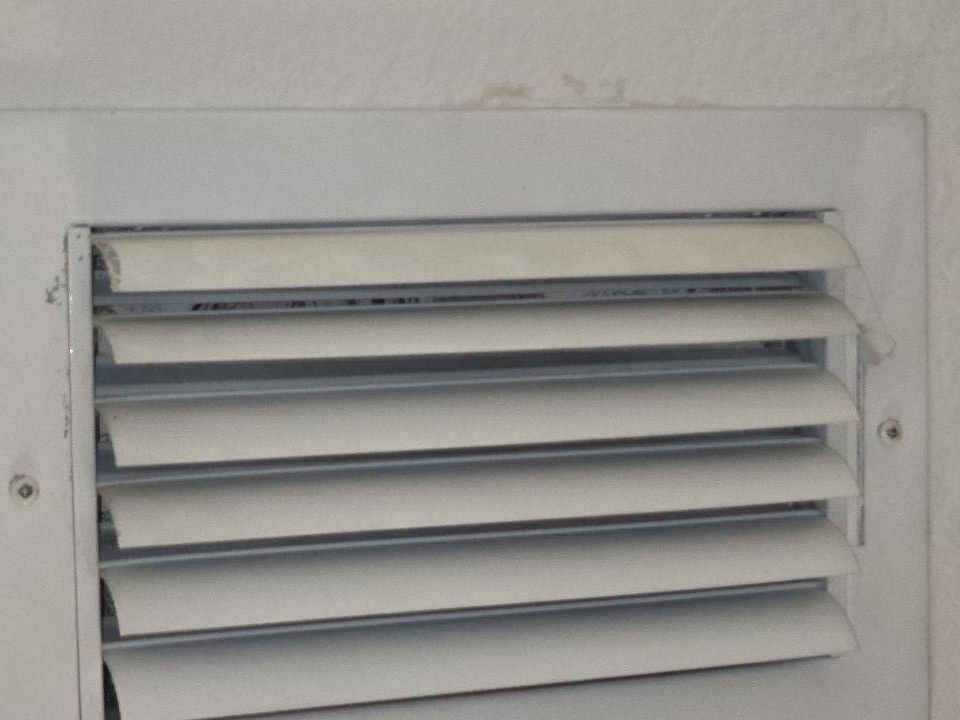
That combination, a specific but narrow mold-inspection question, a broader water-damage question that doesn’t name mold, and an explicit acknowledgment that mold exists in every home to some degree, means the disclosure form is a useful starting point in an Ohio real estate transaction, not a complete mold history. A buyer who wants more certainty than “has this ever been inspected” answers has a real reason to request an independent assessment before closing, rather than treating a clean disclosure form as confirmation there’s nothing there, including in a basement like the one pictured here, where staining like this predates any disclosure conversation entirely.
What if a seller genuinely doesn’t know about a problem like this?
That’s exactly the scenario the form’s narrow wording allows for, and it isn’t a loophole so much as an honest reflection of what a disclosure form can actually capture: what an owner personally knows, not what a professional assessment would find. A seller who’s lived in a home for years without ever going into a crawlspace or behind a finished basement wall can answer every question on the form honestly and still be unaware of something a real inspection would catch. That’s precisely why the form functions as a starting point for a buyer’s own questions, not a substitute for asking them.
Buying or selling and want a real, independent look before it’s official? 888-609-6653 or www.rammoldpro.com
Dealing with water, fire or storm damage? Contact our sister company, Ram Restoration, at www.ramrestorationusa.com/contact/
Related reading
- What Every Dayton Homebuyer Should Know About Mold Before Closing
- Selling Your Home This Year? What a Pre-Listing Mold Check Can Prevent
- Do You Actually Need Mold Testing, or Just a Real Assessment?
- All Ram Mold Pro articles
FAQ’s
Does Ohio’s property disclosure form ask about mold inspections?
Ohio’s Residential Property Disclosure Form asks sellers directly whether the property has ever been inspected for mold by a qualified inspector.
Does the disclosure form ask about water damage?
The form separately asks about water and moisture damage from sources like flooding, seepage, condensation, ice damming, and leaking pipes or fixtures.
Does the Ohio disclosure form say a home is mold-free?
The form explicitly states that “every home contains mold,” treating it as a factual baseline rather than promising a mold-free property.
Sources: State of Ohio Department of Commerce, Residential Property Disclosure Form (per Ohio Revised Code 5302.30)