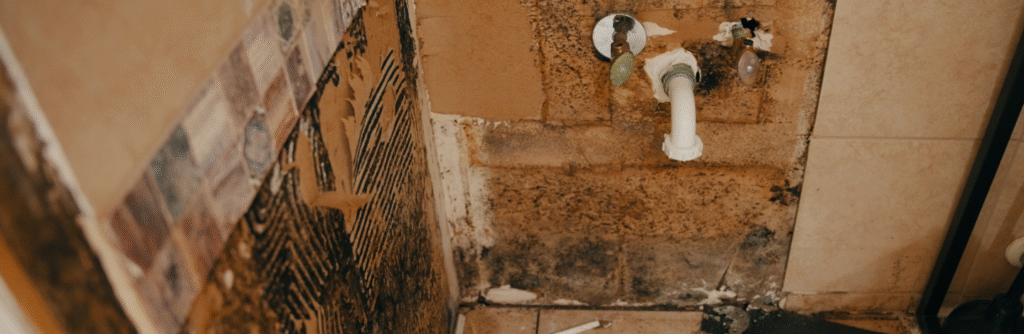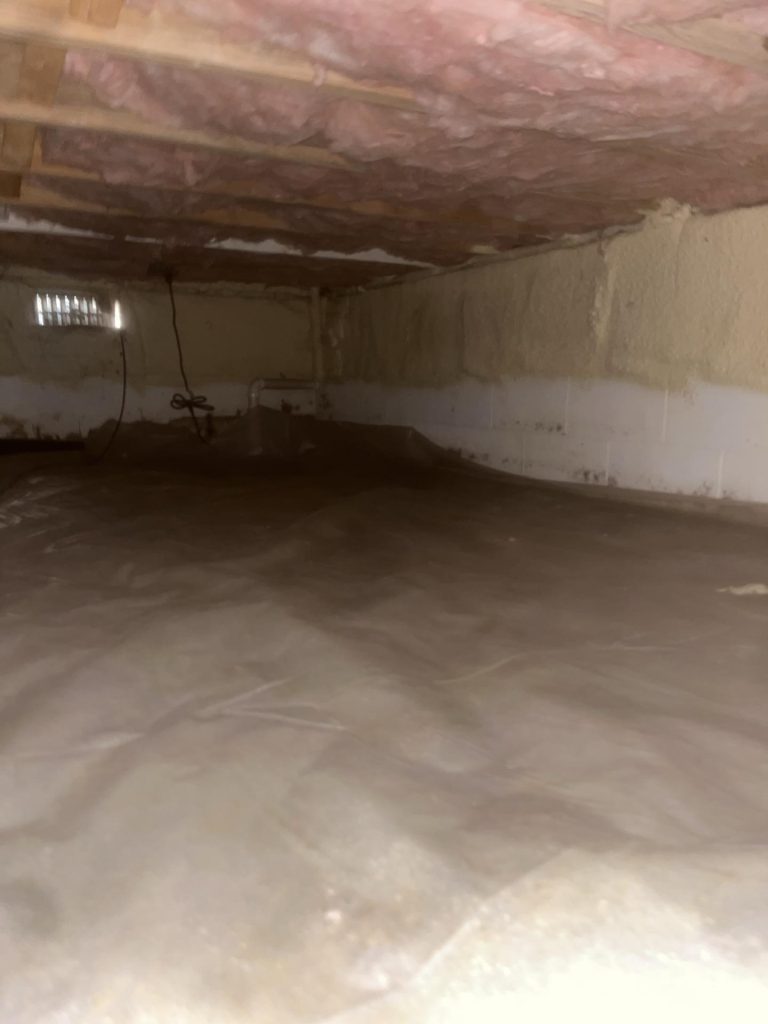
There’s a common piece of fall maintenance advice to close up crawl space vents once the weather turns cold, and it’s generally good advice for keeping pipes from freezing. What it doesn’t do is stop the specific kind of moisture a crawl space generates on its own, from underneath, which is a different problem than the one those vents were closed to solve.
Where does crawl space moisture actually come from, if the vents are already closed?
The EPA’s own guidance on mold and moisture is specific about this, and it’s a source most homeowners wouldn’t expect: the ground itself. As the EPA explains it, “the soil will wick moisture, through capillary action, from moist to dry areas…adding this moisture to the air in the crawl space where it can cause mold to grow.” That process doesn’t depend on a vent being open or closed, a leak, or rain. It’s the ground underneath the house continuously pulling moisture upward into whatever air space sits above it, which in a crawl space is often a few feet of unconditioned space directly beneath living areas. The same EPA guidance notes that crawl space moisture doesn’t necessarily stay contained down there either, since it can “pass from a crawl space into a building through cracks in walls, floors and ceilings.”
Why does freezing weather make this worse instead of better?
It seems counterintuitive that colder ground would hold more moisture rather than less, but the mechanics of ground-level freezing explain why. According to the National Weather Service’s own frost guidance, ground-level temperatures and official air-temperature readings aren’t the same thing: “The temperature at the five foot level may read 36 degrees while at the ground level it is actually the 32 degrees needed to form frost.” A crawl space sits essentially at that ground level, not at the five-foot reading most people think of as “the temperature.” That means a crawl space’s dirt floor can be at or below freezing, drawing moisture upward via that same capillary process, well before the air above ground feels like winter has really arrived. Combine that with vents that have just been sealed up for the season, and a crawl space can end up holding onto more moisture through the coldest months, not less, right as the natural air exchange that vents provide in warmer months disappears.
None of this means closing crawl space vents for winter is the wrong call; it generally isn’t, especially for pipe protection. It means that decision addresses a different problem than ground moisture does, and a crawl space with no ground moisture barrier is working against itself the moment those vents close for the season.
If a crawl space hasn’t been looked at since it was closed up for the season, that’s worth a real look rather than an assumption: 888-609-6653 or www.rammoldpro.com
Dealing with water, fire or storm damage? Contact our sister company, Ram Restoration, at www.ramrestorationusa.com/contact/
Related reading
- What Should You Actually Do As the Seasons Change, According to the EPA?
- Why Does My Basement Have Mold When There’s No Leak Anywhere?
- Does Mold Risk Actually Go Down Once The Weather Turns Cooler?
- All Ram Mold Pro articles
FAQ’s
Where does crawl space moisture come from?
The EPA identifies capillary action in soil as a direct, ongoing source of crawl space moisture, independent of leaks, rain, or vent position.
Can crawl space moisture reach the living space?
The same EPA guidance notes crawl space moisture can migrate into the living space above through cracks in walls, floors, and ceilings.
Can frost form when the temperature is above freezing?
Ground-level frost can form at 32°F even when an official air-temperature reading nearby shows 36°F, per National Weather Service guidance on how frost actually forms.
Sources: U.S. Environmental Protection Agency, “Mold Course Chapter 2”; National Weather Service, Wilmington OH office (ILN), frost formation guidance