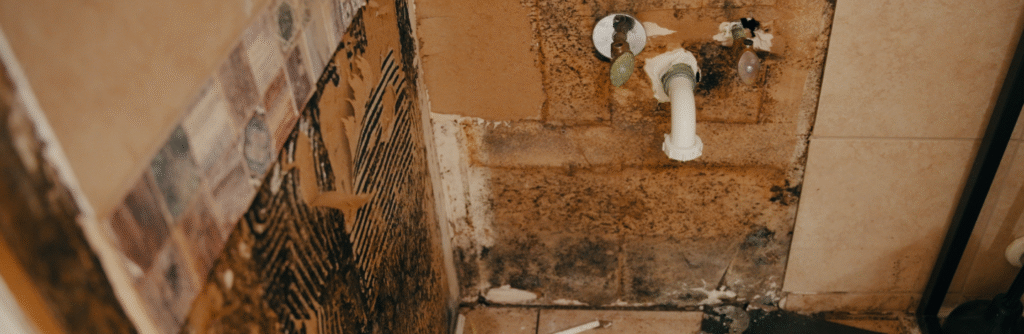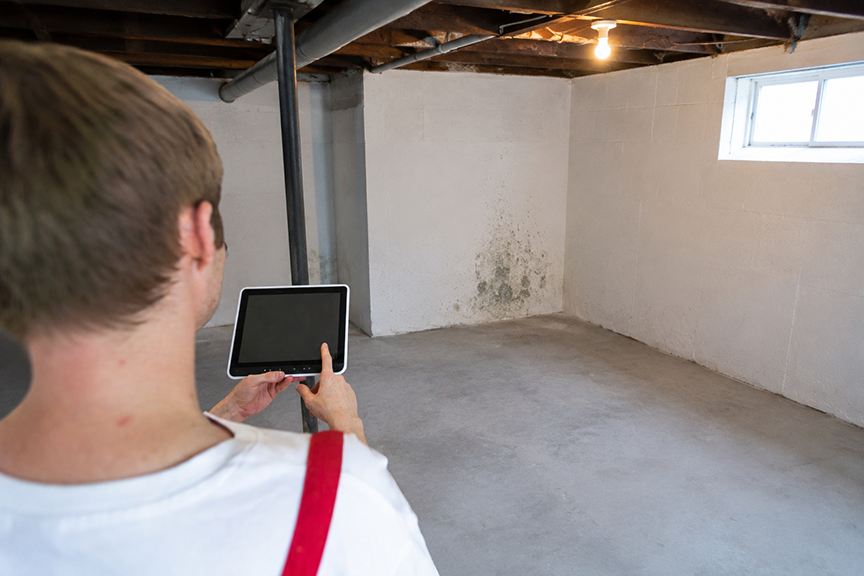
A basement can have no history of flooding and no visible leak anywhere, and still grow mold on the wall like this. That’s because moisture doesn’t need a burst pipe or a storm to get into a basement, it can move straight through solid concrete.
Concrete is porous. Moisture from the wetter ground outside can diffuse through a foundation wall or slab toward the drier basement air, a process called vapor diffusion, and capillary suction can draw water upward through small pores in the footing and slab the same way a paper towel draws up a spill. On top of that, warm air rising through the house creates a slight negative pressure in the basement, which pulls in moist air through any small crack or gap in the foundation. None of that requires a single drop of standing water.
That’s exactly why this kind of mold is easy to miss or misread. There’s no water stain to point to, no storm to blame, so it often gets written off as “just condensation” until someone actually documents where the moisture is coming from rather than just where the mold is growing.
That documentation step is the difference between treating a symptom and fixing the cause. Ram Mold Pro’s mold assessment and remediation services for homes throughout the Dayton, Ohio area are built around identifying which specific pathway, vapor diffusion, capillary action, pressure-driven air movement, or an actual leak, is feeding a basement’s moisture, since the right fix depends entirely on which one it is.
A question we hear often: if there’s no leak, will a dehumidifier take care of it? A dehumidifier lowers the humidity in the room’s air, which helps, but it doesn’t stop moisture that’s moving through the concrete itself, so the wall or floor can keep feeding the problem even while the air around it reads drier.
By the numbers:
- Moisture can move through solid concrete via vapor diffusion and capillary suction, with no visible leak required
- A slight negative pressure created by rising warm air, the “stack effect,” can pull moist air into a basement through small foundation cracks
- The EPA recommends keeping foundations from staying wet, with drainage and grading sloped away from the house, as a first line of defense
Sources: University of Minnesota Extension, “Moisture in Basements: Causes and Solutions”; U.S. Environmental Protection Agency Mold Course, Chapter 9
If your basement has mold but no obvious leak, that’s not unusual, it just means the source needs to be found: 888-609-6653 or www.rammoldpro.com