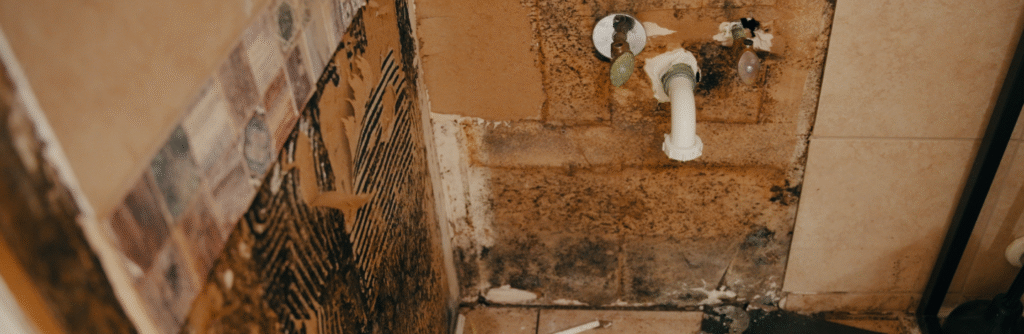
With the rain finally behind us and cooler weeks on the way, it’s tempting to think the mold conversation is over for a while. It isn’t, cooler weather just changes where the risk shows up, it doesn’t remove it.
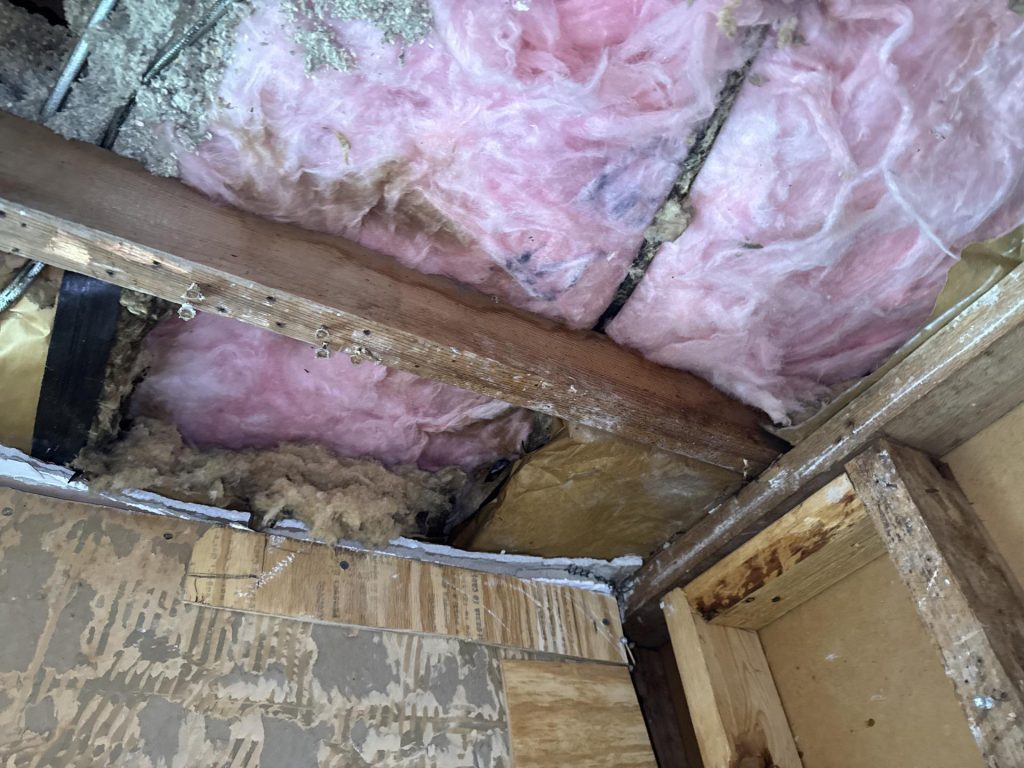
As outdoor temperatures drop, the underside of the roof deck in an attic gets cold, often well below the dew point. Meanwhile, warm, moist air from inside the house is constantly working its way upward, and it doesn’t need a big opening to get into the attic, gaps around light fixtures, exhaust ducts, and attic hatches are usually enough. When that warm indoor air hits the cold roof sheathing, it condenses, and that condensation is exactly the moisture mold needs. No rain required.
That gap matters because attics aren’t spaces anyone checks often, so this kind of condensation can sit on the underside of the roof deck and framing for weeks before it’s noticed, quietly building the same conditions a summer storm would have caused, just from the opposite direction. “It hasn’t rained in a while” isn’t the same as “it’s dry up there.”
The fix is mostly about airflow and sealing: proper ridge and soffit ventilation lets any condensation that does form actually dry out, and sealing the gaps that let warm, moist air leak into the attic in the first place cuts the problem off closer to the source. Ram Mold Pro’s mold assessment and remediation services for homes throughout the Dayton, Ohio area include checking attic spaces for exactly this cold-weather condensation pattern, not just storm-related water damage.
A question we hear often: if it’s dry outside, why would my attic have a moisture problem? Because that moisture usually isn’t coming from outside at all, it’s warm, humid air from inside the house leaking upward and condensing the moment it hits a cold roof surface.
By the numbers:
- Attic condensation forms when warm, moist indoor air meets a cold roof deck below the dew point
- Continuous ridge and soffit ventilation, with roughly 2 inches of clearance above the insulation, lets that moisture actually dry out
- A well-sealed air barrier between living space and attic keeps warm, moist air from reaching the cold roof deck in the first place
Source: U.S. Department of Energy, Building America Solution Center, “Condensation Control in Attics and Roofs in Cold Weather”
Cooler weather doesn’t mean the attic conversation is over, if anything it’s just getting started: 888-609-6653 or www.rammoldpro.com