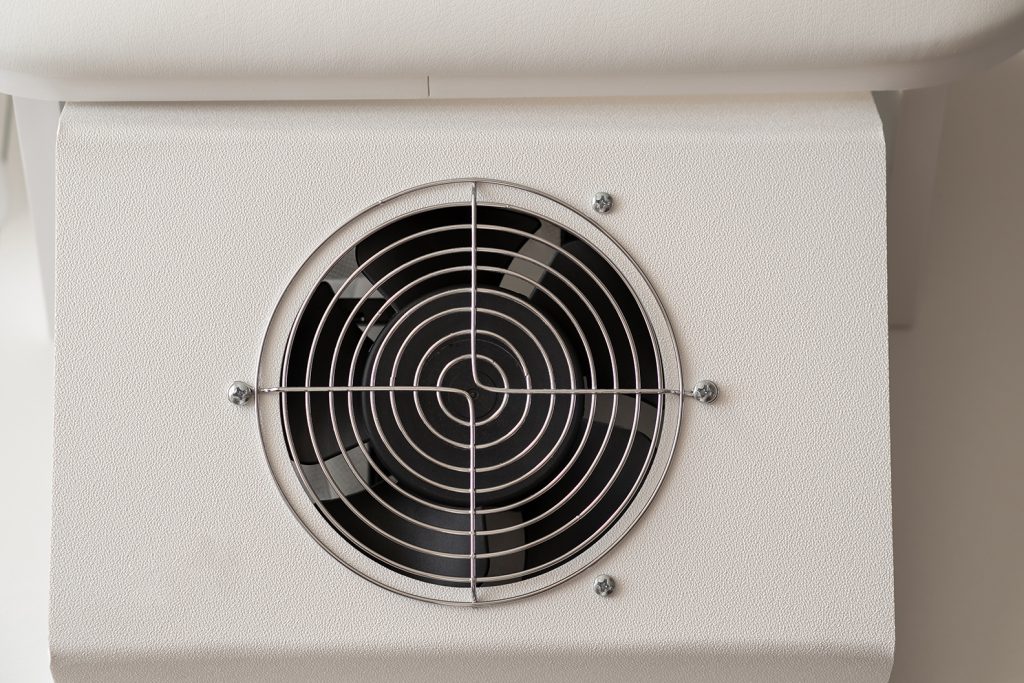
Laundry doesn’t feel like a moisture problem. The clothes go in wet, come out dry, and the water seems to simply disappear. It doesn’t, though. It leaves the dryer as warm, humid air, and where that air goes depends entirely on a few feet of duct behind the machine that most people haven’t looked at since the dryer was installed.
How much water actually comes out of a load of laundry?
More than most people expect. North Dakota State University Extension notes that “the average load of clothes may contain at least a gallon of water,” and that a load can hold as much as 2 gallons, all of which the dryer turns into warm, moist air. Run a few loads on a Saturday and that’s several gallons of water that has to leave the house somewhere.
Where is that moisture supposed to go?
Outdoors. The U.S. Department of Energy’s guidance on dryer venting is direct: “All dryers should be vented outdoors to avoid indoor air quality problems.” When the vent is working, the humid air travels through the duct and out a hood on the side of the house. When it isn’t, some or all of that air ends up in the laundry room, the basement, a wall cavity or an attic.
How does a dryer vent end up putting moisture into the house?
Usually in one of four ways:
- Disconnected: The duct slips off the back of the dryer or off the wall fitting when the machine is moved, and the dryer simply blows into the room behind it.
- Crushed or kinked: Pushing the dryer back against the wall flattens a flexible duct, which restricts airflow and makes the moist air leak at the joints.
- Clogged: Lint builds up inside the duct and at the outdoor hood, so air can’t get out efficiently.
- Vented into the house on purpose: Some homes have an indoor “vent kit” or a duct that ends in the attic, crawl space or garage rather than outdoors.
NDSU Extension is clear on that last one: “venting a clothes dryer into a home is not a good idea.” It adds that the moisture can damage wood and building materials, reduce insulation effectiveness and cause window condensation, and that a gas dryer “never should be vented to the indoors under any circumstances” because of carbon monoxide risk.
Why does this matter more in winter?
In summer, a little extra humidity in a basement or laundry room often has a chance to dry out with open windows and drier days. In winter, the house is closed up, and moisture that isn’t vented outside stays inside. It collects on the coldest surfaces nearby: basement walls, the laundry room window, the underside of an attic roof deck if the vent ends there. That’s the same cold-surface condensation we covered in our post on cold walls and closets, just with a steady extra supply of water behind it.
How do you check a dryer vent in five minutes?
- Pull the dryer out a few inches and look at the duct. It should be firmly attached at both ends, with no gaps, tears or flattened sections.
- Check the duct material. The DOE notes that “the UL standard requires metal dryer venting” and that white vinyl, slinky-style flexible hose doesn’t meet it. Rigid or semi-rigid metal duct is the standard.
- Go outside while the dryer runs and find the vent hood. You should feel a strong flow of warm air and see the flap open. Weak airflow points to a clog or a leak somewhere along the way.
- Look at the hood for lint caught in the flap or screen.
- Follow the duct if you can. If it ends in an attic, crawl space or garage instead of outdoors, that’s worth correcting.
The DOE also notes that “the straighter, smoother, and shorter the vent, the better the air flow,” and that “venting systems should be cleaned at least once a year.”
Is there a fire-safety reason to keep the vent clean, too?
Yes, and it’s the same habit. According to the U.S. Fire Administration, an estimated 2,900 clothes dryer fires in residential buildings are reported each year, and “failure to clean” was the leading factor in those fires, at 34 percent. USFA data also show these fires rise in fall and winter, peaking in January. Cleaning the lint screen after every load and the duct once a year takes care of both the moisture and the fire-safety side.
When is it worth a professional look?
If the laundry room or the area around the vent route smells musty, if you see condensation or staining on nearby walls or ceilings, or if you discover the dryer has been venting into the attic or crawl space for a while, it’s worth having the area assessed. Moisture that has been collecting out of sight for months behaves differently than a one-time spill, and it’s better to know what’s there before you simply reconnect the duct and move on.
If your laundry room or the space around your dryer vent has picked up a musty smell, we can help you figure out why: 888-609-6653 or www.rammoldpro.com
Dealing with water, fire or storm damage? Contact our sister company, Ram Restoration, at www.ramrestorationusa.com/contact/
Related reading
- Should You Keep Firewood Inside Your House?
- What Should You Actually Do As the Seasons Change, According to the EPA?
- Everyday Habits That Quietly Feed Mold Growth
- All Ram Mold Pro articles
FAQ’s
How much water is in a load of laundry?
An average load of laundry may contain at least a gallon of water, and as much as 2 gallons, per NDSU Extension.
How common are dryer fires?
About 2,900 residential clothes dryer fires are reported each year, with “failure to clean” the leading factor at 34 percent, per the U.S. Fire Administration.
How often should a dryer vent be cleaned?
Dryer venting systems should be cleaned at least once a year, per the U.S. Department of Energy.
Sources: North Dakota State University Extension, “Don’t Vent Dryer Into Home”; U.S. Department of Energy, “Dryer Venting”; U.S. Fire Administration, “Clothes Dryer Fires in Residential Buildings” (2012 report release)