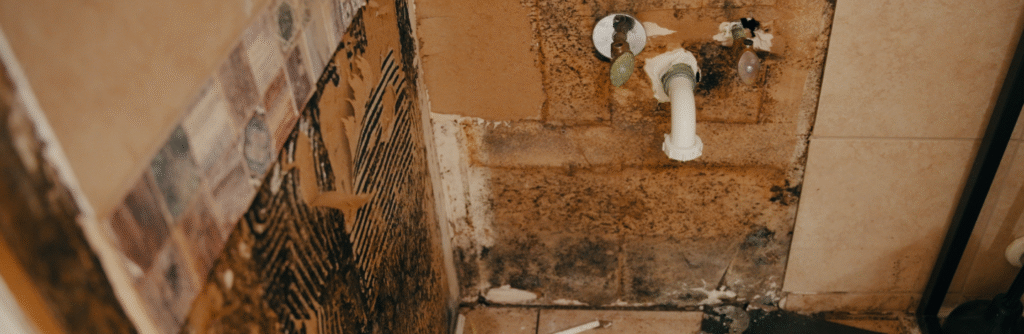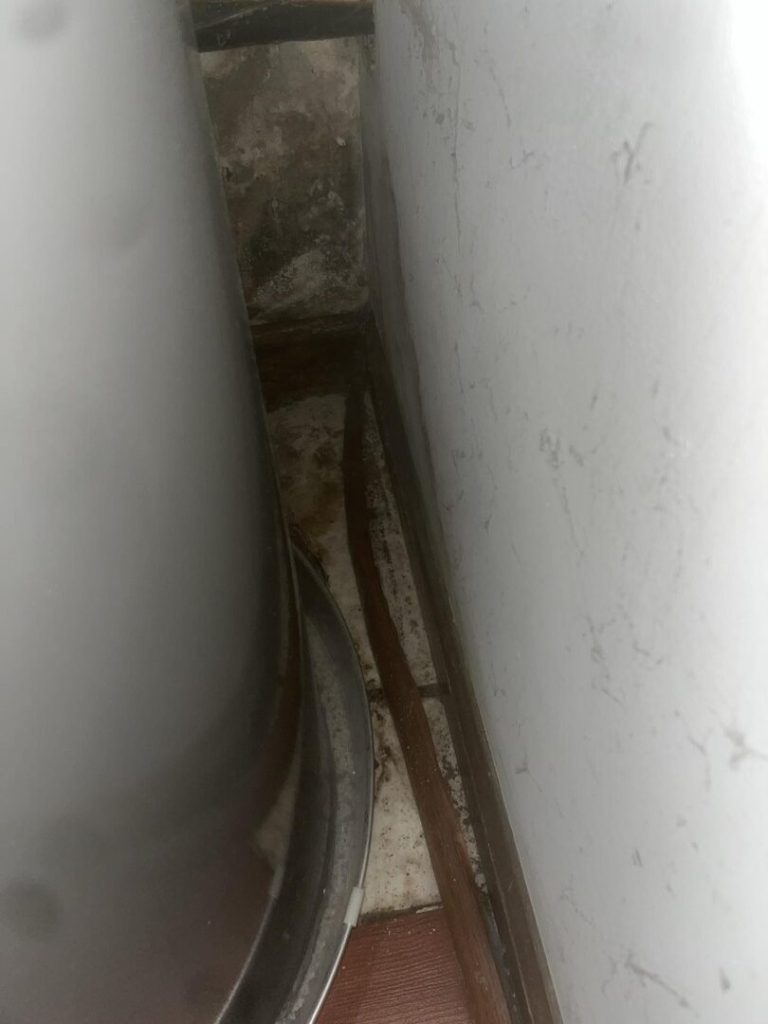
Most mold calls don’t start with a dramatic event. They start with something small enough to overlook for months: a dryer vented into an attic instead of outside, a bathroom fan that’s rarely switched on, a slow faucet or supply line leak that’s been “on the list” for a while. None of these look like a mold problem while they’re happening. Given enough time and enough humidity, several of them quietly become one.
A dryer vented indoors, into an attic, crawl space, or garage rather than outside, pumps a surprising amount of warm, moist air directly into a space that isn’t built to handle it. A bathroom fan that exists but doesn’t get used defeats its own purpose; the moisture from a shower has to go somewhere, and if it’s not being pulled out, it’s settling into the nearest cool surface. A small leak that’s easy to live with, a slightly loose supply line, a faucet that drips into a cabinet, rarely gets urgent attention because it doesn’t look urgent, right up until it is.
For homeowners and facilities teams alike, this is usually where prevention actually pays off, not in bigger equipment or expensive upgrades, but in closing the small maintenance gaps that quietly create moisture over time: running the fan, venting the dryer properly, fixing the leak before it’s convenient rather than after it’s a problem.
By the numbers:
- Indoor relative humidity above 60% supports mold growth on organic material (EPA); ideal range is 30–50%.
- Common overlooked contributors: indoor-vented dryers, underused bathroom exhaust fans, small unaddressed leaks.
- Most remediation calls trace back to one of a small set of recurring, preventable causes.
Not sure if a small habit at home is quietly creating a moisture problem? A quick conversation can tell you. Call 888-609-6653 or visit www.rammoldpro.com to schedule a consultation.