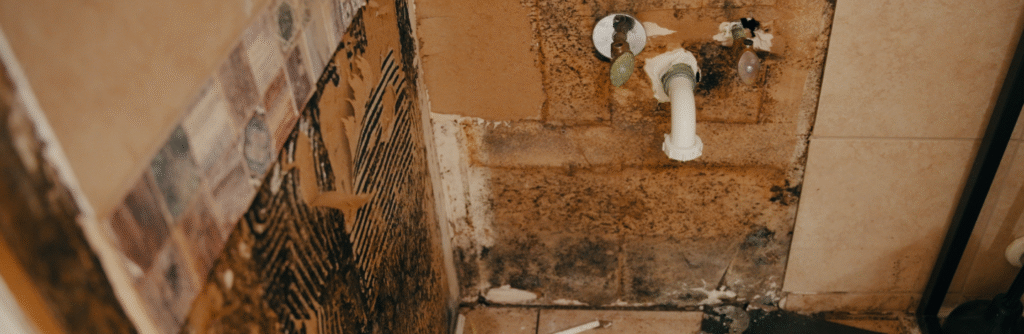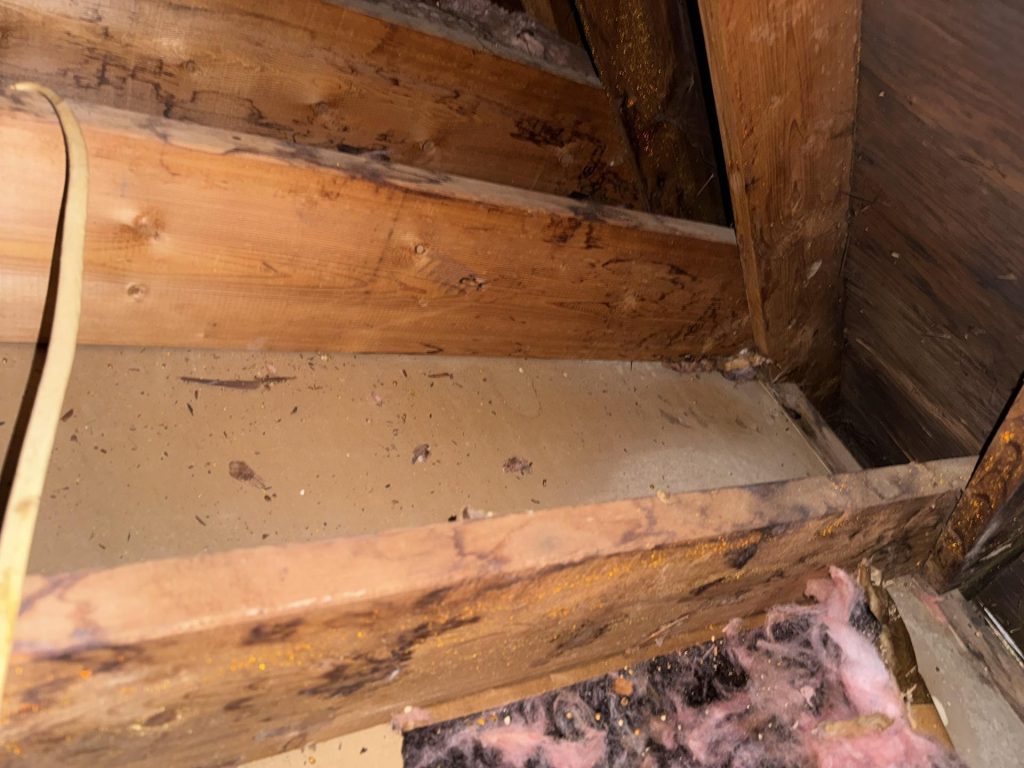
A case like the one pictured here raises an expensive question fast: is any of this covered? The honest answer is usually no, and understanding why matters before a homeowner is standing in a basement like this one trying to figure out what happens next.
The National Association of Insurance Commissioners is direct about this on its own consumer guidance: “homeowners policies often exclude covering the cost of damage from mold.” The Insurance Information Institute puts it even more specifically, describing mold as being treated “like rot and insect infestation,” a home maintenance issue, and maintenance issues are generally not what a standard homeowners policy is built to cover. That’s the core distinction worth understanding: insurance is generally built around sudden, specific, covered events, not gradual conditions that develop from ongoing moisture over time.
There’s an important exception, though, and it’s worth knowing precisely. Both the NAIC and the III note that when mold growth is the direct result of a covered peril, a burst pipe being the clearest example, the cost of eliminating that mold may actually be covered as part of that claim. The distinguishing question an insurer is really asking isn’t “is there mold,” it’s “why is there mold, and was the underlying cause itself a covered, sudden event.” A pipe that burst overnight and caused mold within days is a very different scenario, in an insurer’s eyes, than mold that developed gradually from a slow leak or chronic humidity nobody addressed.
A question we hear often: how would anyone actually know which category their situation falls into? This is exactly where documentation and a real assessment matter, not just for remediation itself but for the insurance conversation that follows it. Establishing when a leak started, whether it was sudden or gradual, and how quickly it was addressed once discovered, is the kind of detail that can determine whether a claim gets treated as covered-peril mold or excluded maintenance-related mold.
It’s also worth knowing that flood-specific coverage works differently still. Standard homeowners policies typically exclude flood damage entirely, and even a federal flood insurance policy, when someone has one, generally only covers mold when it’s directly attributable to an actual flood event, not runoff or gradual water intrusion more broadly. That’s a narrower path to coverage than most homeowners assume going in.
None of this is a reason to skip addressing a mold situation while waiting to sort out coverage. The underlying moisture problem doesn’t pause for an insurance conversation, and delaying only gives the situation more time to spread and get worse, regardless of how the eventual claim conversation goes. It is a reason to document conditions early and understand, going into that conversation, that “there’s mold” and “my policy covers this” are two separate questions with two separate answers.
By the numbers:
- Standard homeowners insurance policies often exclude coverage for mold damage, per the National Association of Insurance Commissioners’ consumer guidance
- Mold resulting directly from a covered peril, such as a burst pipe, may be covered as part of that claim, per the Insurance Information Institute
- Federal flood insurance policies generally only cover mold damage when it is directly attributable to an actual flood event
Sources: National Association of Insurance Commissioners (NAIC), consumer guidance on homeowners insurance; Insurance Information Institute (Triple-I), “Protecting Your Home From Mold”
Not sure if your situation is covered? Get it documented and assessed first: 888-609-6653 or www.rammoldpro.com