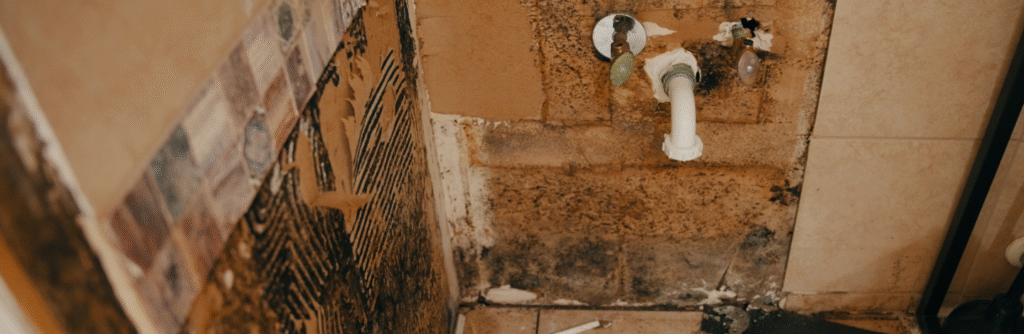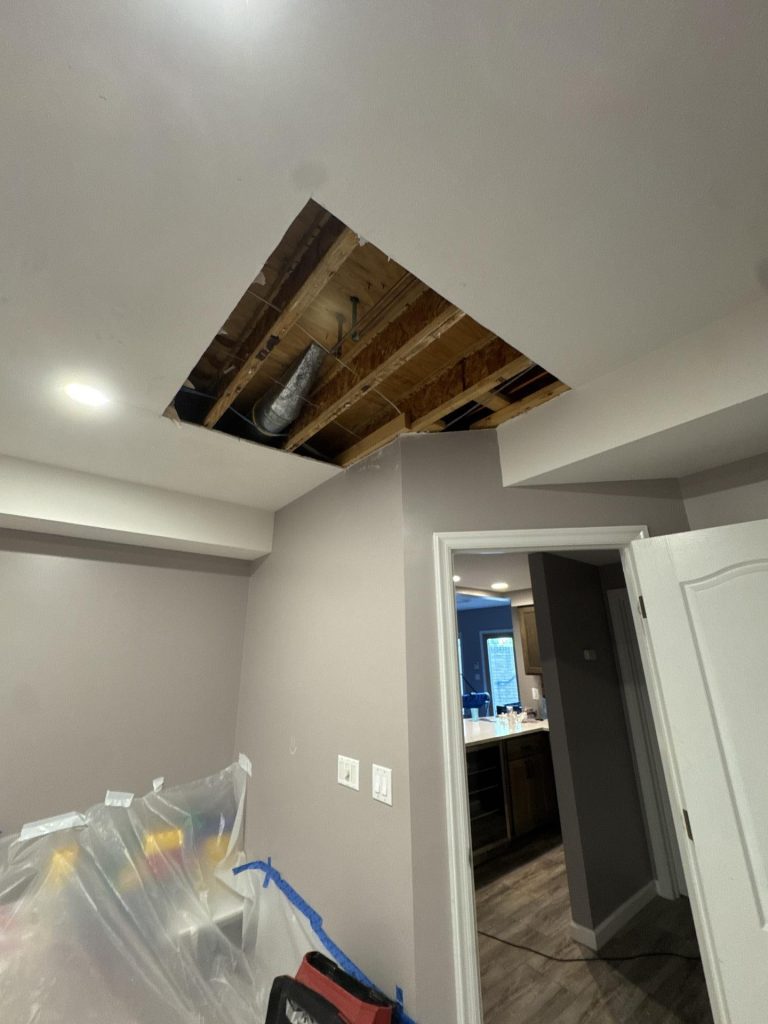
A musty smell with nothing visible to explain it is one of the more common, and more confusing, situations homeowners run into. No stain, no discoloration, no obvious wet spot, just a smell that wasn’t there before. That combination usually points to growth that’s happening somewhere you can’t see.
The musty odor associated with mold doesn’t come from the mold itself so much as from microbial volatile organic compounds, MVOCs, gases given off by actively growing mold as part of its normal metabolic process. Because MVOCs travel through air more easily than visible growth spreads across a surface, a smell can show up well before, or without ever showing, a visible sign on any accessible surface.
That usually means the growth is behind drywall, under flooring, inside a wall cavity, or somewhere else outside normal view, often tied to a slow, small moisture source that’s been present for a while: a minor plumbing leak, condensation inside a wall cavity, or moisture trapped under a flooring material.
Finding it typically requires more than a visual walkthrough. Moisture meters, thermal imaging, and a methodical check of likely sources, plumbing runs, exterior walls, HVAC lines, are the standard way to trace an odor back to its source without opening up walls at random.
A smell with nothing to see is still worth a real answer. Call 888-609-6653 or visit www.rammoldpro.com to schedule a consultation.
Dealing with water, fire or storm damage? Contact our sister company, Ram Restoration, at www.ramrestorationusa.com/contact/
Related reading
- How Do You Know If You Have Hidden Mold? Signs, Testing, and When to Call a Pro
- How Long After Rain Does Mold Actually Start Growing In Your Dayton Home?
- Why Summer Is the Worst Season for Hidden Mold in Dayton Homes
- All Ram Mold Pro articles
FAQ’s
What causes a musty smell?
The musty smell linked to mold comes primarily from MVOCs, gases released by actively growing mold, which can travel through air even without visible surface growth.
What does a musty smell with no visible mold mean?
A smell with no visible source usually points to growth inside a wall cavity, under flooring, or in another space outside normal view.
How do professionals find hidden mold?
Moisture meters and thermal imaging are standard tools for tracing a hidden source without opening walls at random.
Source: EPA/CDC general guidance on mold-related odor (microbial volatile organic compounds) and building dampness evaluation