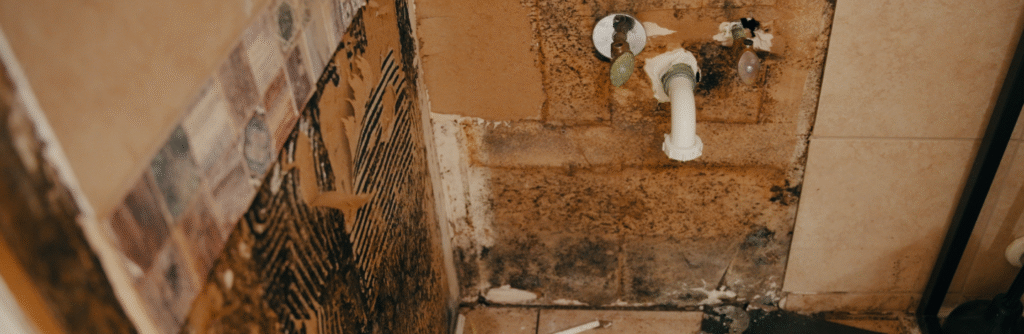
Finding mold near a vent or return and turning the system back on feels like a reasonable middle step while you figure out what to do next. It’s actually one of the more effective ways to spread the problem to the rest of the building.
An HVAC system doesn’t sit next to a building’s air, it moves it, continuously, to every connected room. If mold is present in or near the ductwork, running the system pushes spores through that entire air path, distributing them into spaces that had nothing to do with the original source, sometimes within a matter of hours. This is a bigger risk in commercial and multi-unit buildings specifically, where a single shared system can carry a localized problem into units or offices that share nothing but the ductwork.
The more conservative move, and the correct one, is to shut the system down until it’s been evaluated rather than continuing to run it “until someone can take a look.” That’s a harder call to make in the middle of summer or winter, when the system is doing real work keeping a space comfortable, but running it in the meantime can turn a contained issue into a building-wide one.
An assessment of the system, ductwork, coils, and drain pans determines whether it’s safe to keep running, needs isolated component work, or needs a broader remediation plan before it goes back into regular use.
By the numbers:
- HVAC systems can distribute spores to every connected room within hours of continued operation.
- Shared systems in multi-unit and commercial buildings put uninvolved units/offices at risk from a single localized source.
- An assessment, not guesswork, is the standard way to determine whether a system is safe to keep running.
Suspect mold near your HVAC system? Don’t wait to find out the hard way. Call 888-609-6653 or visit www.rammoldpro.com to schedule a consultation.